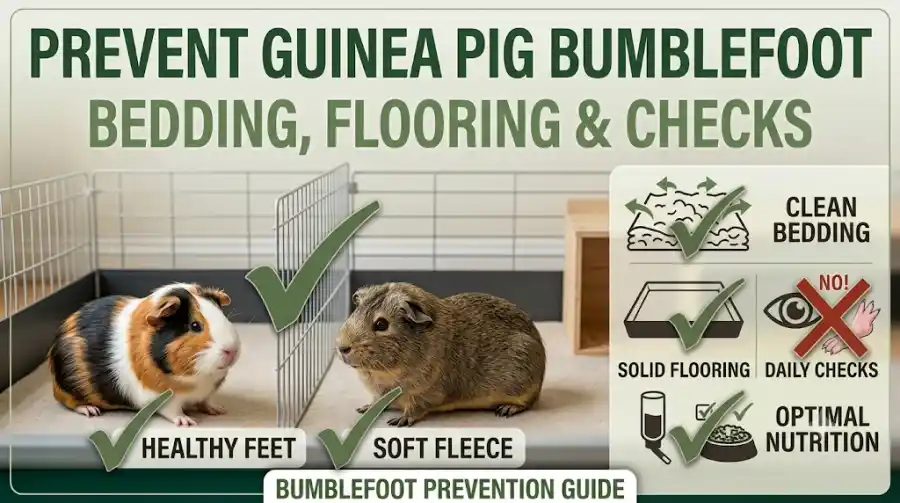
When people search for prevent bumblefoot in guinea pigs, they usually want a practical answer they can use today—not a vague list of tips. How to Prevent Bumblefoot in Guinea Pigs is about Bedding, Flooring and Daily Checks should be approached as a management question: what does the animal need, what changes should an owner watch for, and when is a normal home-care problem becoming a veterinary or husbandry concern?
Guinea pigs are small herbivores with specific nutritional and housing needs. A good care plan combines constant forage, appropriate vitamin C, clean housing, solid flooring, social companionship, temperature control and regular observation of feet, teeth, appetite and weight. The best plan is therefore not one-size-fits-all. Age, body condition, workload, environment, diet, climate and previous health problems can all change the right approach.
What this means for guinea pigs
The practical goal with prevent bumblefoot in guinea pigs is to create a repeatable routine rather than chase a single “best” trick. Start with the animal’s normal baseline, make one sensible change at a time, and watch the response. If the animal has another medical condition, is pregnant, is very young or old, or is receiving treatment, the plan should be individualized with a veterinarian or qualified animal-health professional.
One useful way to think about the problem is to separate prevention, observation and response. Prevention means providing the correct environment and diet before a problem develops. Observation means noticing changes early. Response means knowing which changes can be monitored and which require professional help. This approach is more reliable than waiting until a symptom is severe and then trying several remedies at once.
Build the routine around normal biology
The safest care plan starts with understanding what the species naturally needs for food, movement, rest, social interaction and environmental conditions. A routine that ignores those basics can create problems even when the owner is attentive.
For an owner, the most useful habit is consistency. Check the same basic points at roughly the same time each day, keep the environment predictable, and compare the animal with its own normal behavior rather than with photographs or advice about a different individual. If something changes, note when it started, whether it is getting better or worse, and whether appetite, drinking, movement or behavior changed at the same time. That information can be far more valuable than a guess about the diagnosis.
Create a daily observation habit
Spend a few quiet minutes watching the animal before changing anything. Check appetite, water, activity, posture, droppings or manure, grooming and interaction. Regular observation makes subtle changes easier to recognize.
For an owner, the most useful habit is consistency. Check the same basic points at roughly the same time each day, keep the environment predictable, and compare the animal with its own normal behavior rather than with photographs or advice about a different individual. If something changes, note when it started, whether it is getting better or worse, and whether appetite, drinking, movement or behavior changed at the same time. That information can be far more valuable than a guess about the diagnosis.
Make the environment safe
Remove hazards, keep food and water clean, provide appropriate shelter and inspect equipment regularly. Good management prevents many avoidable injuries and illnesses.
For an owner, the most useful habit is consistency. Check the same basic points at roughly the same time each day, keep the environment predictable, and compare the animal with its own normal behavior rather than with photographs or advice about a different individual. If something changes, note when it started, whether it is getting better or worse, and whether appetite, drinking, movement or behavior changed at the same time. That information can be far more valuable than a guess about the diagnosis.
Keep records
A simple notebook or phone note can track weight, feeding, medications, vaccinations, parasite control, unusual signs and changes in routine. Records help identify trends and make veterinary conversations more useful.
For an owner, the most useful habit is consistency. Check the same basic points at roughly the same time each day, keep the environment predictable, and compare the animal with its own normal behavior rather than with photographs or advice about a different individual. If something changes, note when it started, whether it is getting better or worse, and whether appetite, drinking, movement or behavior changed at the same time. That information can be far more valuable than a guess about the diagnosis.
Avoid internet shortcuts
Online advice can be helpful for learning, but species-specific care is important. Avoid copying a dose, supplement or treatment from another animal. When a problem is persistent or serious, professional advice is safer.
For an owner, the most useful habit is consistency. Check the same basic points at roughly the same time each day, keep the environment predictable, and compare the animal with its own normal behavior rather than with photographs or advice about a different individual. If something changes, note when it started, whether it is getting better or worse, and whether appetite, drinking, movement or behavior changed at the same time. That information can be far more valuable than a guess about the diagnosis.
Use enrichment and gentle handling
Animals benefit from predictable routines and opportunities to express natural behaviors. Handling should be calm, appropriate to the species and stopped when the animal shows fear or distress.
For an owner, the most useful habit is consistency. Check the same basic points at roughly the same time each day, keep the environment predictable, and compare the animal with its own normal behavior rather than with photographs or advice about a different individual. If something changes, note when it started, whether it is getting better or worse, and whether appetite, drinking, movement or behavior changed at the same time. That information can be far more valuable than a guess about the diagnosis.
Plan for seasonal changes
Heat, cold, humidity, parasites, breeding seasons and changes in forage or daylight can alter care requirements. Prepare before the season creates a crisis.
For an owner, the most useful habit is consistency. Check the same basic points at roughly the same time each day, keep the environment predictable, and compare the animal with its own normal behavior rather than with photographs or advice about a different individual. If something changes, note when it started, whether it is getting better or worse, and whether appetite, drinking, movement or behavior changed at the same time. That information can be far more valuable than a guess about the diagnosis.
Know when home care ends
If an animal is severely weak, struggling to breathe, repeatedly refusing food, unable to stand, bleeding heavily, showing seizures or deteriorating rapidly, contact a veterinarian or qualified animal-health professional promptly.
For an owner, the most useful habit is consistency. Check the same basic points at roughly the same time each day, keep the environment predictable, and compare the animal with its own normal behavior rather than with photographs or advice about a different individual. If something changes, note when it started, whether it is getting better or worse, and whether appetite, drinking, movement or behavior changed at the same time. That information can be far more valuable than a guess about the diagnosis.
Practical checklist
- Know what normal appetite, drinking, activity and behavior look like for this individual.
- Keep food and water clean and appropriate for the species and life stage.
- Check housing, temperature, ventilation, flooring and equipment regularly.
- Make changes gradually when the species and situation allow it.
- Record important changes instead of relying on memory.
- Do not use human medicines or another animal’s prescription without veterinary direction.
- Seek professional help when signs are severe, sudden, persistent or worsening.
Evidence-based guidance worth reading
For additional species-specific context, the Merck Veterinary Manual: guinea pig housing and nutrition is a useful reference: Merck Veterinary Manual: guinea pig housing and nutrition. The Merck Veterinary Manual: exotic animal care also provides helpful background for owners:
Related Horse Facts
Frequently Asked Questions
Is this advice suitable for every guinea pigs?
No. Species, age, size, climate, diet and health history can change what is appropriate. Use this guide as general education and adapt the plan to the individual animal.
What is the first thing I should check?
Start with the basics: appetite, water intake, behavior, breathing, movement, droppings or manure, and the condition of the housing. These observations establish whether the issue is isolated or part of a wider change.
When should I contact a veterinarian?
Contact a veterinarian when the animal is seriously unwell, rapidly deteriorating, unable to eat or drink normally, struggling to breathe, collapsing, showing severe pain, or displaying another emergency sign. Earlier advice is preferable when you are uncertain.
Can I fix the problem with a supplement?
Sometimes nutrition is part of prevention, but a supplement should not be treated as a universal solution. The correct first step is to identify the animal’s needs and the cause of the problem.
How to Prevent Bumblefoot in Guinea Pigs: Bedding, Flooring and Daily Checks is best approached as a management plan rather than a single trick. Give the animal an appropriate environment, balanced nutrition, clean water, regular observation and species-appropriate enrichment. When something changes, act on the change early and use professional veterinary or husbandry guidance when the situation is beyond routine home care. Good animal care is usually built from many small, consistent decisions—and those decisions become much easier when you know what “normal” looks like.