How Much Forage Does a Horse Need When Pasture Is Poor?
When pasture becomes dry, sparse, muddy or overgrazed, horses may not receive enough forage from grazing alone. Because the equine digestive system is designed for frequent intake of fibrous feed, owners need a plan that maintains gut health without causing unwanted weight gain.
Why forage matters
Forage includes pasture, hay and other fibrous feeds. It supports:
– Normal gut movement
– Chewing and saliva production
– A healthy hindgut environment
– Behavioral needs such as grazing and searching for food
– Weight maintenance
– Reduced risk of long fasting periods
A horse may have access to a field all day and still be short of usable forage if the grass is very short, mature, weather-damaged or heavily grazed.
How much forage does a horse need?
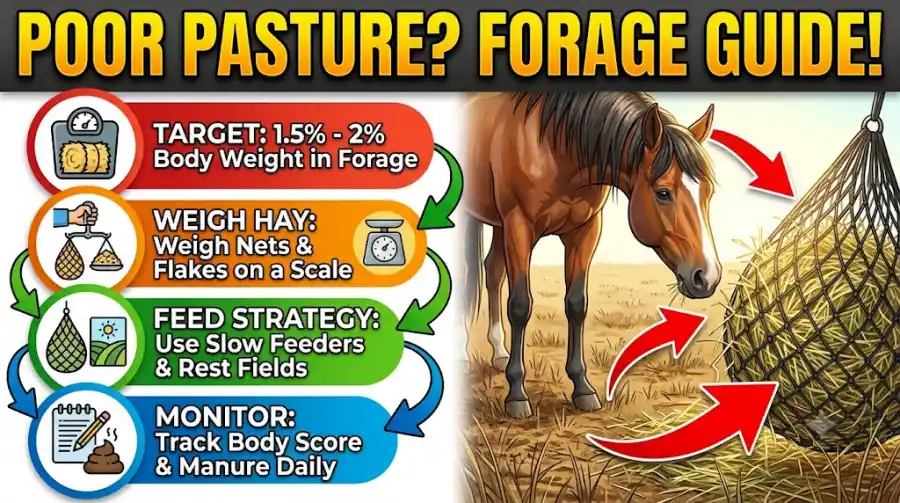
A common starting point for many adult horses is approximately 1.5–2% of body weight per day in forage dry matter, adjusted for the horse’s condition, workload, metabolism and veterinary or nutrition advice.
For example, a 500 kg horse might begin with a rough daily forage target in the range of 7.5–10 kg of dry matter. Hay contains some moisture, so the actual weight of hay offered can be higher than the dry-matter figure.
This is a planning estimate, not a universal prescription. Easy keepers, horses with metabolic concerns, growing horses, pregnant or lactating mares and hard-working horses may need individualized plans.
Signs pasture is not meeting needs
Watch for:
– Weight loss or a topline that is declining
– Increased eagerness around feed
– Longer periods with nothing to graze
– Chewing fences, bedding or unusual objects
– Reduced manure volume
– Dull coat or poor muscle condition
– Aggression around hay
– Visible bare ground and very short grass
– A horse finishing available forage long before the next feeding
A horse can also gain weight on poor-quality-looking pasture if the available grass is sugar-rich. Appearance alone does not tell you the full nutritional value.
Choosing hay
When pasture is limited, select hay based on:
– Clean smell and appearance
– No visible mold
– No excessive dust
– Appropriate maturity
– Suitable nutrient density
– Reliable storage history
– The horse’s body condition and health
Grass hay may suit many horses. Legume hays can be more nutrient-dense and may be useful for some animals, but they are not automatically right for every horse.
Ask a qualified nutrition professional about hay analysis when weight, sugar, mineral balance or performance is a concern.
Weigh forage instead of guessing
Flakes vary widely in size and density. A “flake” is not a consistent unit.
Use a hanging scale or luggage scale to weigh hay nets, bags or portions. Track how much is offered and how much remains. This gives a more accurate picture than counting flakes.
If hay is soaked, remember that soaking changes water content and may affect the weight you record.
Feeding when pasture is poor
Practical strategies include:
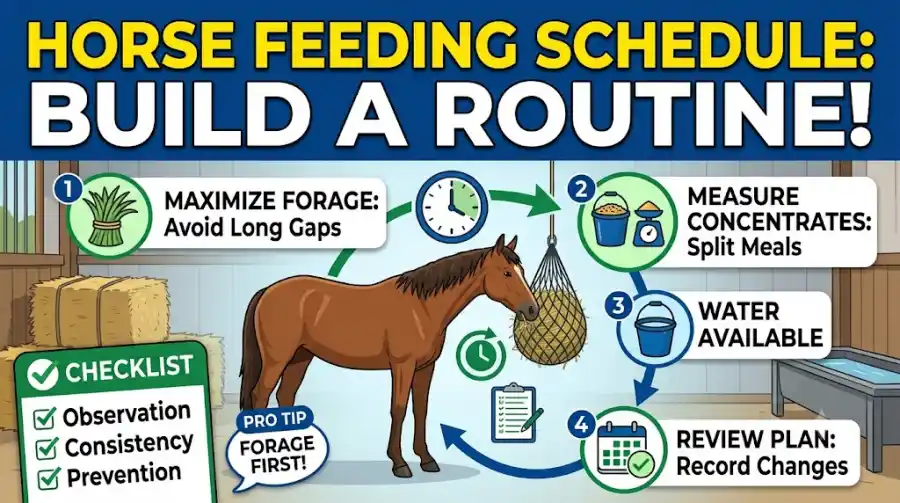
– Offer hay before the horse runs out of grazing.
– Use several feeding points where safe.
– Consider slow-feeding nets when appropriate.
– Keep forage available for longer periods.
– Avoid sudden large changes in hay type.
– Monitor manure, appetite and body condition.
– Adjust concentrate feed only after reviewing total forage intake.
Slow feeders may extend eating time, but openings must be appropriate and the horse should be monitored for frustration, dental difficulty or unsafe entanglement.
Avoid long fasting periods
Long periods without forage can be stressful and may increase digestive risk. Horses that consume all their hay quickly may need a revised quantity, feeding schedule, slow feeder or turnout arrangement.
Do not restrict forage aggressively simply because the horse is an easy keeper. Instead, work with your veterinarian or nutritionist to balance calorie control with gut and behavioral needs.
Easy keepers and metabolic concerns
Some horses gain weight on relatively little feed. They still need adequate fiber. Weight management may involve:
– Measuring forage
– Using lower-energy hay when appropriate
– Testing hay for sugar and other nutrients
– Increasing safe movement
– Managing pasture access
– Monitoring body condition and neck crest changes
– Avoiding unnecessary calorie-dense supplements
Horses with suspected insulin dysregulation or a history of laminitis need professional guidance.
Pasture management steps
When grass is struggling:
1. Rotate or rest damaged areas.
2. Provide a sacrifice or dry lot when needed.
3. Supplement with hay before the pasture is bare.
4. Prevent horses from grazing muddy, heavily trampled areas continuously.
5. Remove manure and manage weeds.
6. Test soil and improve fertility appropriately.
7. Reintroduce pasture gradually after regrowth.
Pasture quality changes with rainfall, temperature, season and grazing pressure.
Monitor the horse, not just the field
Use a consistent body-condition assessment. Take photos from the side and rear every few weeks, record weight-tape measurements if useful, and monitor manure and behavior.
A horse that is losing weight despite adequate forage may have dental disease, parasites, pain, endocrine disease or another medical problem.
Poor pasture does not automatically mean a horse needs large amounts of grain. The first priority is usually a measured, appropriate forage plan. Weigh hay, reduce long gaps without fiber, monitor body condition and involve your veterinarian or nutritionist when the horse has special needs.
FAQs
Can a horse live on hay when pasture is poor?
Yes. Good-quality hay can provide the forage foundation when pasture is limited, provided the diet meets the horse’s needs.
Is one hay flake enough?
There is no universal answer because flakes differ in weight. Weigh the hay and calculate intake based on the horse’s body weight and condition.
Should I feed grain if the pasture is dry?
Not automatically. Review forage quantity and quality first. Grain may be unnecessary or inappropriate for many horses.
How quickly should I change to a new hay?
Make changes gradually over several days when possible, while monitoring manure, appetite and signs of digestive upset.