
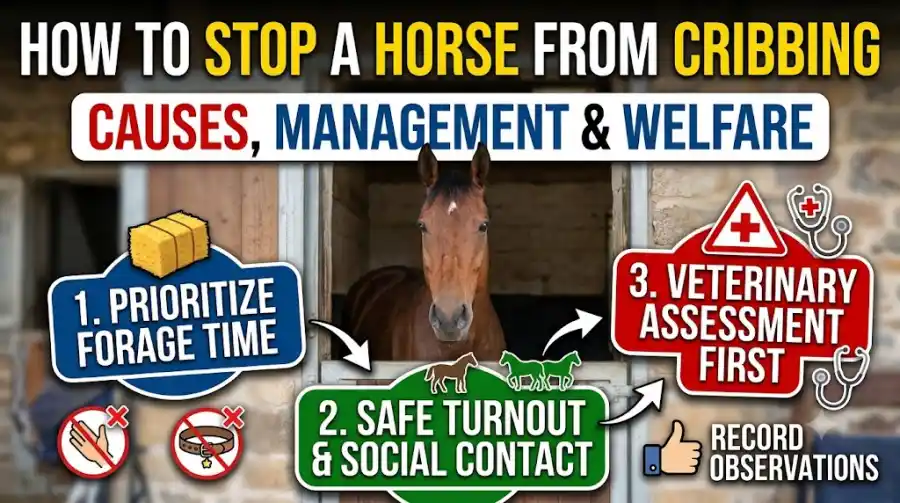
How to Stop a Horse From Cribbing: Causes, Management and Welfare
Every horse owner benefits from having a clear, practical plan for how to stop a horse from cribbing. The best approach combines routine observation, safe handling, consistent management and early veterinary or professional advice when something changes. This guide explains the key principles, common mistakes and a sensible day-to-day process for making decisions with your horse.
Why this topic matters
Horse care is rarely about one isolated action. Weather, workload, age, body condition, diet, housing, temperament and previous medical history all influence what is appropriate. A method that works for one horse may be unsuitable for another. Use the information below as a framework, then adjust it with your veterinarian, farrier, qualified trainer or equine nutrition professional when needed.
Start with your horse’s normal baseline
Before changing anything, observe what is normal for your horse:
– Appetite and drinking habits
– Manure and urination
– Energy, attitude and movement
– Body condition and muscle coverage
– Skin, coat and hoof appearance
– Response to handling and routine
– Tolerance of weather, travel and exercise
Record changes rather than relying on memory. A small change noticed early is often easier to manage than a serious problem discovered later.
A practical step-by-step approach
1. Assess the situation
Look at the environment first. Consider temperature, humidity, wind, rain, mud, dust, insects, footing, feed availability, social pressure and the horse’s recent workload. Check whether equipment, fencing, bedding or facilities create a risk.
2. Choose the least complicated safe option
Good management is usually consistent rather than complicated. Make sure the horse has appropriate forage, clean water, safe shelter or turnout, and enough opportunity for normal movement and social contact. Avoid adding products, supplements or restrictive practices simply because they are popular.
3. Introduce changes gradually
Sudden changes can create stress and digestive or behavioral problems. Change one major factor at a time when possible. Give the horse time to adapt and monitor the response over several days.
4. Check fit, comfort and safety
Any blanket, halter, tack, feeder, stall arrangement or enrichment item should fit correctly and be checked regularly. Remove damaged equipment. Avoid ropes, toys or objects that can trap a hoof, leg or head.
5. Keep written notes
A useful record includes the date, conditions, what you changed, how the horse responded and what you plan to do next. Photos can help track body condition, skin changes, hoof cracks or swelling.
Common mistakes to avoid
Owners often run into trouble by:
– Copying another horse’s routine without considering individual needs
– Making several changes at once
– Ignoring small signs because the horse is still eating
– Using medication or supplements without professional advice
– Leaving equipment on without checking fit
– Allowing long periods without forage or movement when avoidable
– Waiting too long to call a professional
– Treating a management problem as a training problem—or vice versa
A calm, repeatable routine is usually safer than an urgent reaction.
When professional advice is needed
Contact your veterinarian promptly for severe pain, breathing difficulty, collapse, marked weakness, inability to eat or drink, sudden severe lameness, neurologic signs, uncontrolled bleeding, suspected poisoning or rapidly worsening symptoms. A farrier should assess significant hoof pain, sudden lameness, deep cracks, abscess concerns or changes that do not improve.
For behavior issues, involve a qualified trainer or behavior professional who uses safe, welfare-centered methods. Do not punish a horse for behavior that may be caused by pain, fear, hunger, poor housing or an unsuitable setup.
A simple maintenance checklist
Use this checklist as a starting point:
– [ ] Inspect the horse from head to tail.
– [ ] Check water, forage and feed availability.
– [ ] Look at fencing, stall and turnout hazards.
– [ ] Check equipment for damage and fit.
– [ ] Observe manure, appetite and attitude.
– [ ] Review weather and workload.
– [ ] Record anything unusual.
– [ ] Contact the appropriate professional when needed.
The most reliable horse-care decisions come from combining observation, prevention and individualized management. Start with the horse’s baseline, make changes slowly, check safety frequently and ask for professional help when signs are severe, persistent or unfamiliar.
Frequently asked questions
Is there one rule that works for every horse?
No. Horses differ in age, coat, health, metabolism, temperament, workload and housing. Use general guidance as a starting point rather than a rigid prescription.
How quickly should I expect a change to help?
Some management changes help immediately, while others require days or weeks. If the horse worsens or shows pain, do not wait for the plan to work—contact a professional.
Should I use a supplement or special product?
Only when there is a clear reason and the product is appropriate for the horse. Discuss supplements with a veterinarian or nutrition professional, especially when the horse has a medical condition.
What is the most important daily habit?
Observe your horse every day. Early recognition of changes in appetite, movement, manure, attitude, skin, coat or hooves is one of the strongest tools an owner has.
Cribbing management priorities
Cribbing is a repetitive behavior in which a horse grips an object and pulls back, often with an audible gulp. It may be associated with stress, restricted forage, limited movement, social isolation or gastrointestinal discomfort. Management should prioritize more forage time, safe turnout, social contact, enrichment and a veterinary assessment. Avoid relying only on punishment or restrictive devices; welfare and the underlying cause matter.