
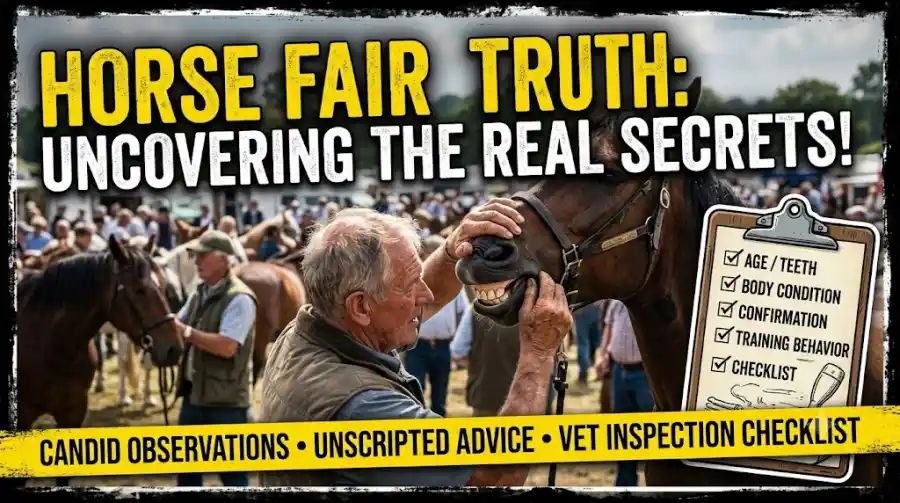
What to Look for When Visiting a Horse Fair
Visiting a horse fair is different from browsing an ordinary market. What to Look for When Visiting a Horse Fair explains how to prepare before arriving, what to observe on the day and how to keep safety and respectful horse handling at the center of the experience.
Before you go
Check the event details, opening times, weather, parking and any rules for visitors. Wear practical footwear and carry only what you need. If you intend to evaluate a horse for purchase, decide your criteria before arriving.
Reading the environment
Watch how horses are handled, whether water is available, whether animals have adequate shade or shelter and whether the general environment appears organized. Crowds and noise can affect behavior.
Observing a horse
Look first from a distance. Notice attitude, movement, body condition and interaction with handlers. Avoid rushing up, touching an unfamiliar horse or entering a space without permission.
If a purchase is involved
A fair is not a substitute for a veterinary examination or careful purchase process. Ask questions, verify records where relevant and arrange appropriate professional assessment before making a significant commitment.
Respectful behavior
Follow organizer instructions, ask before photographing people or animals, keep children supervised and give working horses enough space. Respectful behavior improves the event for everyone.
After the visit
Write down what you learned while it is fresh. If you are considering a horse, compare notes rather than making a decision because of excitement or pressure.
A few practical questions to ask yourself
Before applying advice from any article, ask whether the information fits the individual horse, the actual environment and the owner’s level of experience. If the subject involves health, pain, injury or a safety-critical decision, professional advice should take priority over internet instructions.
For routine management, keep changes measurable. Record what you changed, when you changed it and what happened afterward. That simple habit makes it easier to spot patterns and prevents a series of guesses from becoming the horse’s new routine.
Horse care becomes more reliable when information is connected to observation. Whether the subject is a breed, a health sign, riding equipment, a historical story, a horse fair or another animal, context matters. Learn the background, check the individual situation, avoid assumptions and make safety part of the decision.
The goal is not to turn every horse-care task into a complicated project. It is to make better decisions with the information available, recognize when something is outside normal experience and know when to bring in a veterinarian, farrier, qualified trainer or another appropriate professional.
Making the information useful in everyday life
There is also a human side to good horse management. A horse may be handled by an owner, family member, groom, trainer, farrier, veterinarian or riding instructor. If each person follows a different routine, the horse may receive mixed signals and important observations may be lost. A short written note can solve much of this problem. Record unusual behavior, equipment concerns, health observations, maintenance dates and planned changes. Clear communication is especially valuable when the horse is traveling or moving between facilities.
Finally, remember that a safe routine should be practical enough to continue. An elaborate plan that nobody follows is less useful than a simple plan that is checked consistently. Start with the most important risks, make the routine easy to understand and review it when the horse, season, workload or environment changes.
Looking at the subject in real-world conditions
A useful article should still make sense when an owner leaves the screen and returns to the barn. Real horses do not always present situations in neat categories. A breed may be discussed in the context of training, a health observation may appear during grooming, riding equipment may reveal a problem only after exercise, and a horse event may involve questions about both animal welfare and public safety. That is why context is important.
Start by identifying the immediate purpose. If you are learning about a breed, decide whether you are simply researching its history or considering an individual horse. If the subject is health-related, distinguish routine observation from a situation that needs veterinary attention. If equipment is involved, determine whether the item is decorative, convenience-oriented or safety-critical. Those distinctions change how carefully the information needs to be applied.
It is also worth considering the horse’s previous experience. A young horse, a recently relocated horse and a seasoned competition horse may respond very differently to the same environment. The difference does not necessarily mean one horse is better behaved. It may simply mean that the horses have different histories. Good horsemanship takes those histories into account.
Weather and seasonal conditions can change the practical answer as well. Heat, cold, rain, mud, insects and poor footing may alter how comfortable a horse is and how equipment performs. Owners should therefore review routines when conditions change rather than assuming that a procedure that worked in one season will always be appropriate.
Records can make this process much easier. Keep dates for health checks, equipment inspections, professional appointments, travel, changes in feed and other meaningful events. When something unusual occurs, write down what happened before and after it. A record does not diagnose a problem, but it gives professionals better information and helps owners recognize repeated patterns.
Questions worth asking before taking action
What am I actually trying to solve? A clear problem produces a clearer plan. Avoid buying a product or changing a routine simply because it is popular.
What does normal look like for this horse? The individual baseline is often more informative than a generic description.
Could the horse be uncomfortable? A sudden change in behavior, movement or cooperation can have a physical cause.
Is the equipment or environment contributing? Fit, footing, noise, crowding, temperature and poor maintenance can all affect a horse’s response.
Can I make the change gradually? For non-urgent situations, gradual changes usually provide better opportunities to observe the result.
Who should I contact if the situation is beyond my experience? Knowing when to involve a veterinarian, farrier, trainer or another qualified professional is part of responsible ownership, not a failure of independence.
Building better horse knowledge over time
The strongest horse owners rarely learn everything from one article. They build knowledge through repeated observation, reputable education and conversations with experienced professionals. Read widely, but compare advice rather than assuming every source is equally reliable. Pay particular attention to the date of information when regulations, competition rules, event details or veterinary recommendations are involved.
Most importantly, keep the individual horse at the center of the decision. A general guide can explain possibilities, but it cannot see the horse standing in front of you. The owner still needs to observe, ask sensible questions and respond appropriately.
That approach also helps prevent overreaction. Not every unusual detail is an emergency, but meaningful changes should not be dismissed. Calm observation gives you a chance to distinguish a temporary variation from a persistent problem. When the situation is serious, clear records and prompt professional advice are much more valuable than trying a series of unverified remedies.
In the long run, this style of management creates a horse-care routine that is both safer and easier to maintain. It does not depend on perfect memory or a complicated checklist. Instead, it depends on knowing the horse, checking the environment, maintaining equipment, recording important changes and asking for help when the situation calls for expertise.


