A horse’s eyes are among the most important features to monitor during everyday grooming and health checks. Because horses have large eyes positioned on the sides of their heads, they can be exposed to dust, insects, branches, bedding particles and accidental injuries. Even a problem that initially looks minor can become serious if it affects the cornea or deeper structures of the eye.
Recognizing horse eye problems early can help owners seek veterinary attention before discomfort or vision loss becomes more severe. Watery eyes, swelling, redness, squinting and cloudiness are all signs worth taking seriously. Some conditions need urgent examination, even when the horse otherwise appears healthy.
This guide explains common eye problems in horses, the warning signs owners should watch for, safe first steps and practical ways to support everyday eye health.
Why Is Eye Health Important for Horses?
Horses rely heavily on their vision to understand their surroundings, notice movement and navigate unfamiliar spaces. Their eyes are large and positioned laterally, giving them a wide field of view. This is useful for an animal that needs to remain aware of its environment, but it also means the eyes can be vulnerable to injury.
A horse may develop an eye problem after:
- Scratching its face against a fence or stable fixture
- Contact with branches, grass or other vegetation
- Dust, bedding particles or foreign material
- Insect irritation
- Infection or inflammation
- An underlying eye condition
- Accidental trauma during turnout or handling
Eye conditions can look similar from the outside. For example, excessive watering may occur with irritation, a corneal injury or inflammation inside the eye. Owners should not try to identify the exact condition by appearance alone.
Common Signs of Eye Problems in Horses
A daily visual check can help you notice changes before they become more advanced. Observe both eyes from a safe position and compare them with the horse’s usual appearance.
1. Excessive Tearing or Watery Eyes
A horse may develop watery eyes because of irritation, inflammation, an injury or a problem with normal tear drainage. Wind, dust and insects can also contribute to irritation.
Occasional mild watering is not always an emergency, but persistent or excessive tearing deserves veterinary attention, particularly when it affects only one eye or occurs alongside squinting, swelling or cloudiness.
2. Squinting or Keeping One Eye Closed
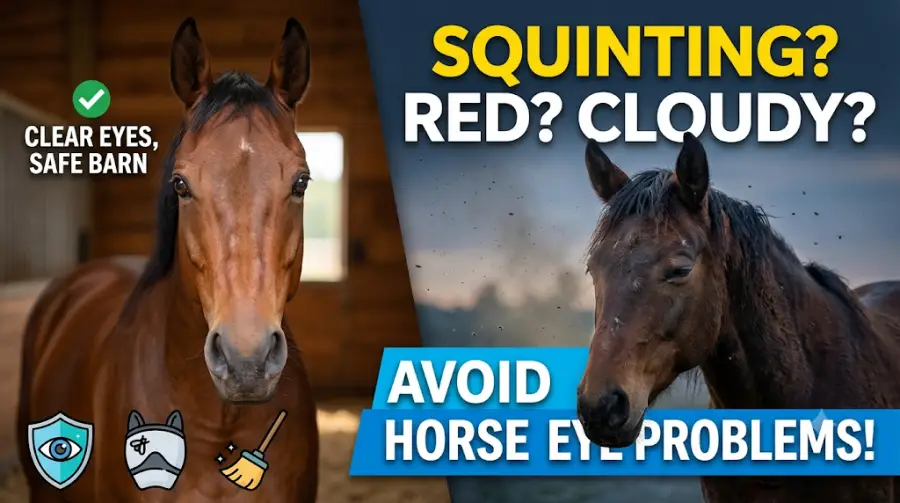
Squinting is an important warning sign. A horse that holds an eye partly or completely closed may be experiencing pain or sensitivity to light.
Possible causes include corneal injury, an ulcer, inflammation or a foreign object. A painful eye should be assessed promptly rather than watched for several days to see whether it improves.
3. Redness Around the Eye
Redness may affect the tissues around the eye or the visible white and pink structures. It can be associated with irritation, inflammation, injury or infection.
Redness alone does not establish a diagnosis. However, a suddenly red eye, especially when accompanied by discharge or discomfort, should be discussed with a veterinarian promptly.
4. Cloudiness or a Change in Eye Colour
A healthy cornea is normally clear. If the front surface of the eye develops a cloudy, blue, white or hazy appearance, there may be swelling, inflammation, injury or another eye disorder.
Do not assume that cloudiness is simply dust or an age-related change. Some corneal conditions can progress rapidly and threaten vision.
5. Swelling Around the Eyelids
Swelling may develop after an insect bite, blunt injury, infection or inflammation. It can affect one or both eyelids and may make it difficult for the horse to open the eye normally.
Sudden swelling around the eye should be treated seriously. A veterinarian needs to determine whether the problem is limited to the eyelid or involves the eyeball and surrounding structures.
6. Discharge or Crusting
A small amount of dried material near the inner corner of the eye may occur occasionally. However, thick, yellow, green or increasing discharge can indicate a problem that needs examination.
Pay attention to the amount, colour, smell and frequency of discharge. Also note whether the horse is rubbing its face or showing discomfort.
Common Eye Conditions in Horses
Several different conditions can affect equine eyes. The following explanations help owners understand what a veterinarian may investigate, but they are not a substitute for an examination.
Corneal Ulcers
The cornea is the clear outer surface at the front of the eye. A corneal ulcer develops when its protective surface is damaged.
In horses, ulcers may occur after scratches, foreign material or other injuries. They can become infected with bacteria or fungi and may worsen quickly.
Common warning signs include:
- Squinting or keeping the eye closed
- Excessive tearing
- Sensitivity to light
- Cloudiness or a visible change on the cornea
- Swelling and discomfort
A veterinarian may use a special fluorescein stain to identify damage to the corneal surface. Treatment depends on the depth, severity and cause of the injury. Corneal ulcers should not be treated with leftover medication or ordinary household eye products.
Equine Uveitis
Uveitis is inflammation of the uveal structures inside the eye. It can cause pain, light sensitivity, tearing and changes in the appearance of the eye.
Some horses experience repeated episodes, which can lead to long-term damage and impaired vision. Recurrent uveitis is an important cause of blindness in horses.
Possible signs include:
- Squinting
- Redness
- Excessive tearing
- Cloudiness
- A change in pupil size
- Sensitivity to bright light
A veterinarian must examine the eye to distinguish uveitis from other conditions. The treatment plan depends on the underlying cause and the structures affected.
Conjunctivitis
Conjunctivitis refers to inflammation of the conjunctiva, the tissue lining the eyelids and covering parts of the visible eye.
It may be associated with irritants, infection, allergies or another eye condition. Signs can include redness, swelling, watering and discharge.
Because similar symptoms can occur with more serious conditions, an owner should not automatically assume that redness means simple conjunctivitis. A veterinary examination is especially important when the horse is squinting or the cornea looks cloudy.
Corneal Abscesses
A corneal stromal abscess develops when infectious material becomes established within the cornea. It may follow a small injury or contamination.
The affected eye can become painful and develop a white or yellow area within the cornea. These cases can be difficult to distinguish from other corneal disorders without specialist examination.
Prompt veterinary care is important because infection and inflammation may threaten the eye’s structure and vision.
Eyelid Injuries
Cuts or tears around the eyelids can happen when a horse contacts fencing, branches or stable equipment. Even a small-looking wound may need careful treatment because the eyelids help protect the eye and spread tears across its surface.
A laceration close to the eyelid margin should be assessed urgently. Do not attempt to close the wound yourself or apply creams before receiving veterinary instructions.
When Is a Horse Eye Problem an Emergency?
Eye problems deserve a cautious approach because vision is important to a horse’s safety and welfare. Contact a veterinarian urgently if you notice:
- The horse suddenly keeps an eye tightly closed
- A cloudy or blue appearance develops
- There is significant swelling around the eye
- The eye has been struck, scratched or punctured
- A cut affects the eyelid
- Blood is visible in or around the eye
- The pupil looks unusually large or irregular
- The horse shows severe pain or sensitivity to light
- Discharge occurs together with squinting or swelling
- The eyeball appears displaced, enlarged or visibly damaged
If you suspect an eye injury, do not wait until the next routine appointment. Contact your veterinarian and explain when the problem began and what you observed.
What Should You Do If Your Horse Has a Sore Eye?
The safest first step is to contact a veterinarian. While arranging an examination, focus on preventing further injury rather than trying to treat the condition yourself.
- Keep the horse calm. Move it carefully to a quiet, familiar area if this can be done safely.
- Reduce bright light. If light appears to bother the horse, provide a shaded environment.
- Prevent rubbing. Avoid letting the horse scrape its face against fencing, walls or stable fixtures.
- Do not force the eyelids open. A painful horse may react suddenly, and pressure can make an injury worse.
- Do not remove an embedded object. Leave anything stuck in or near the eye for veterinary assessment.
- Avoid unprescribed medication. Do not use human eye drops, old veterinary ointments or leftover medication without veterinary instructions.
- Record what you see. Note when the symptoms began, which eye is affected and whether the appearance is changing.
If a veterinarian specifically advises gentle cleaning or another first-aid measure, follow those instructions. Avoid touching the surface of the eyeball.
Why You Should Not Use Random Eye Drops
It can be tempting to use an eye product already available in the stable. This is risky because different eye conditions require different treatments.
For example, some medications containing corticosteroids can make certain corneal ulcers or infections worse. An eye that appears red or cloudy may have an injury that cannot be safely identified without examination.
The wrong product can delay appropriate treatment and may increase the risk of complications. Always ask your veterinarian before putting medication into an affected eye.
How to Prevent Common Horse Eye Problems
Not every eye injury can be prevented, but good daily management can reduce some avoidable risks.
Check the Eyes During Daily Grooming
Look at both eyes every day. Check for watering, discharge, redness, swelling, cloudiness and changes in how the horse holds its eyelids.
Make a note of unusual changes rather than relying on memory. If a sign persists or appears painful, contact your veterinarian.
Keep Stable Areas Safe
Look for sharp edges, protruding nails, damaged boards and equipment positioned at eye level. Repair hazards that could scratch the face or eye.
Keep feed and bedding areas reasonably clean to reduce unnecessary dust and debris.
Manage Flies and Insects
Flies can irritate the area around the eyes and contribute to rubbing. Appropriate fly protection, good manure management and suitable turnout arrangements can help reduce exposure.
A well-fitted fly mask may provide a useful physical barrier. It should not rub against the eyes, restrict vision or become dirty and uncomfortable. Inspect it regularly and remove it when necessary for cleaning and checking the horse.
Consider Sun Protection
Some horses, particularly those with unpigmented skin around the eyes, may be more vulnerable to certain sun-related conditions. A suitable UV-protective fly mask may help reduce exposure.
Ask your veterinarian whether UV protection is appropriate for your horse, especially if it has a history of eye problems or unusual skin pigmentation around the eyelids.
Avoid Dusty Environments
Excessive dust can irritate the eyes and respiratory tract. Review bedding, hay handling and stable ventilation if your horse regularly experiences irritation.
Keep the horse’s living area clean, but avoid creating unnecessary airborne dust while sweeping or moving bedding.
What Information Should You Give Your Veterinarian?
Clear observations can help the veterinarian decide how urgently the horse needs examination and what diagnostic steps may be useful.
Be prepared to explain:
- When you first noticed the problem
- Whether one eye or both eyes are affected
- Whether the horse is squinting or rubbing its face
- Whether there is tearing, discharge, swelling or cloudiness
- Whether an injury or foreign object may have been involved
- Whether the horse has experienced eye problems before
- Whether its appetite, behaviour or movement has changed
A photograph may help document how the eye looks, but it should never delay veterinary care or replace an examination.
Frequently Asked Questions
Why is my horse’s eye watering?
Watering can result from irritation, a foreign object, an injury, inflammation or a tear-drainage problem. Persistent watering or watering accompanied by pain, swelling or cloudiness needs veterinary assessment.
Is a cloudy eye in a horse serious?
It can be. Cloudiness may indicate corneal swelling, an ulcer, inflammation or another condition. A newly cloudy or painful eye should be assessed urgently.
Can a horse recover from a corneal ulcer?
Many corneal ulcers can heal with appropriate veterinary treatment, but the outcome depends on their depth, infection status and how quickly treatment begins. Complicated ulcers may threaten vision and require specialist care.
Should I wash my horse’s eye with water?
Do not routinely wash or touch an injured eye without veterinary advice. If cleaning is recommended, ask your veterinarian which product and method are appropriate.
Can flies cause horse eye problems?
Flies can irritate the eye area and encourage rubbing. Fly control and a properly fitted, clean fly mask can help reduce exposure, but a painful or swollen eye still requires veterinary attention.
How often should I check my horse’s eyes?
A quick visual check should be part of your daily grooming and health routine. Look at both eyes and notice any change from the horse’s normal appearance.
Horse eye problems should never be ignored simply because the horse is still eating, walking or behaving normally. Squinting, excessive tearing, swelling, redness and cloudiness can all indicate conditions that need prompt attention.
The most useful habit is simple: check both eyes every day, keep the stable environment safe, manage insects and dust, and contact a veterinarian whenever a new or painful eye problem appears.
Early professional assessment can make a major difference in protecting your horse’s comfort and vision. When it comes to eye health, acting quickly is safer than waiting to see whether the problem disappears.