If your horse constantly rubs its tail against a fence, scratches its mane or seems uncomfortable whenever insects are around, it may be dealing with more than an ordinary itch. Repeated rubbing can break the hair, damage the skin and leave painful areas that become vulnerable to infection.
Sweet itch in horses is a recurring allergic skin condition associated mainly with bites from tiny biting midges. It is also known as insect bite hypersensitivity or seasonal recurrent dermatitis. Although it is often more noticeable during warmer months, the problem can affect a horse’s comfort for much of the insect season.
The good news is that owners can take practical steps to reduce insect exposure, protect vulnerable skin and work with a veterinarian to manage flare-ups. There is currently no guaranteed cure, so consistent prevention and early attention are important.
What Is Sweet Itch in Horses?
Sweet itch is an allergic reaction to proteins in the saliva of biting insects. The insects most commonly involved are tiny midges belonging to the Culicoides group. Other biting insects may also trigger similar reactions in some horses.
When a susceptible horse is bitten, its immune system reacts to substances in the insect’s saliva. This can produce intense itching and inflammation. The horse then rubs or scratches the affected areas, causing further skin damage.
The condition is not simply caused by having dirty skin, poor grooming or an ordinary insect bite. It is an allergic response, and some horses are more susceptible than others.
Sweet itch can affect different breeds, ages and types of horses. A horse that has experienced the condition in previous years may develop signs again when biting insects become active.
What Causes Sweet Itch?
The main trigger is exposure to biting midges, particularly Culicoides species. These insects are small and may be difficult to notice, but their bites can cause a strong reaction in susceptible horses.
Several factors can influence the risk of flare-ups.
1. Biting midges
Midges feed on horses and other animals. Their saliva contains proteins that can trigger an allergic response. In affected horses, even repeated small bites may lead to significant itching.
2. Warm and humid conditions
Midge activity is influenced by local weather and environmental conditions. Warm, humid periods can create favourable conditions for biting insects. The timing and intensity of the insect season vary by location and climate.
3. Areas that attract insects
Standing water, damp vegetation, manure and sheltered areas may contribute to insect activity. The exact breeding and resting preferences vary by insect species, so not every wet area will create the same level of risk.
4. Individual susceptibility
Some horses are more likely to develop insect bite hypersensitivity. Genetic factors may play a role, but the condition is not restricted to one breed.
A horse’s previous history is useful information. If it has developed similar itching during the same season in earlier years, tell your veterinarian.
Common Symptoms of Sweet Itch
The most recognisable sign is intense itching. However, the condition can cause several visible changes to the coat and skin.
1. Repeated tail rubbing
A horse may rub its tail against stable doors, trees, fences or posts. Repeated rubbing can break the hair and leave the tail base looking thin or uneven.
2. Mane damage
The mane may become rough, broken or patchy because the horse repeatedly scratches its neck against objects. In some cases, the skin underneath becomes thickened and irritated.
3. Hair loss
Constant rubbing and biting can remove hair from the mane, tail, neck, face and other affected areas. Hair loss is often more noticeable where the horse can easily reach to scratch.
4. Red, inflamed or thickened skin
The skin may become red, scaly, crusty or thickened. Long-term scratching can produce folds and damaged patches.
5. Small bumps and sores
Some horses develop small raised areas, crusts or open sores. Damaged skin can become infected, particularly when the horse continues to rub the same area.
6. Restlessness and irritation
A horse that is constantly uncomfortable may become restless, irritable or difficult to settle. It may spend more time rubbing, swishing its tail or trying to bite itchy areas.
7. Head shaking and vigorous tail swishing
These behaviours may occur when insects are bothering the horse. They are not specific to sweet itch, however, and can have other causes.
Symptoms may begin mildly and become more severe if exposure continues. Early action can help reduce the cycle of itching, rubbing and skin damage.
Which Areas of the Horse Are Usually Affected?
Sweet itch commonly affects areas where biting insects feed and where horses can repeatedly rub.
Typical areas include:
- Base of the mane
- Tail head and dock
- Withers
- Neck
- Face and ears
- Belly and underside
- Chest and groin
Not every horse develops signs in all these places. Some have mainly mane and tail problems, while others experience itching over a wider area.
The distribution of the skin changes can help a veterinarian assess the problem, but it does not confirm sweet itch by itself.
How Is Sweet Itch Diagnosed?
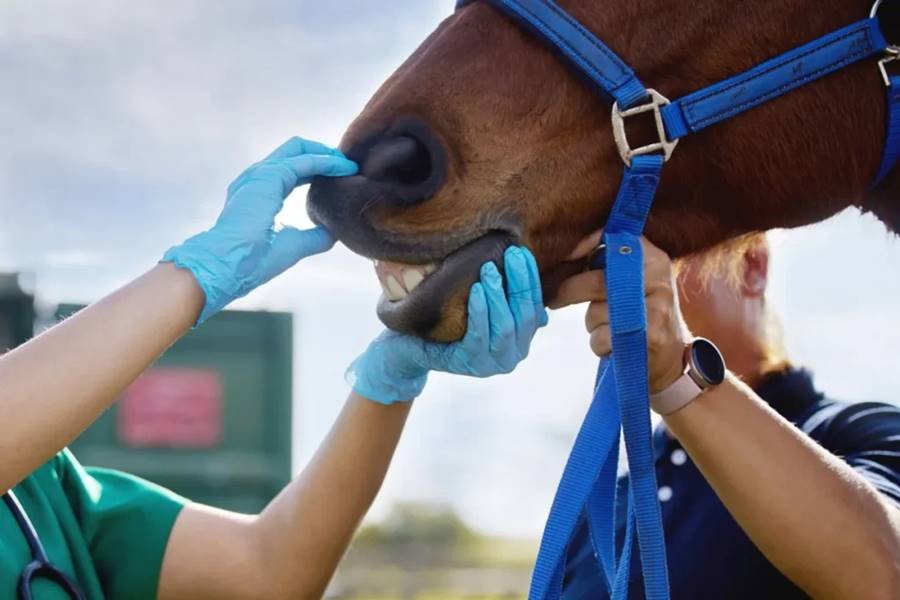
There is no single simple visual check that confirms every case. A veterinarian usually considers the horse’s history, the location and appearance of the skin changes, the season and the pattern of recurrence.
The examination may include:
- Medical history: When did the itching begin? Does it return during a particular season?
- Skin examination: Which areas are affected? Are there broken hairs, crusts, wounds or signs of infection?
- Other possible causes: Could parasites, lice, mites, bacterial infection, fungal disease or another allergic condition explain the symptoms?
- Response to insect control: Does reducing exposure to biting insects improve the signs?
Allergy tests may sometimes be considered, but they do not independently establish the diagnosis in every horse. Your veterinarian will interpret any test results alongside the horse’s clinical history and examination.
Do not assume every itchy horse has sweet itch. Different skin conditions can look similar but need different treatment.
Treatment for Sweet Itch in Horses
There is currently no universal cure that permanently removes sweet itch. Treatment focuses on reducing exposure to the insects, controlling inflammation and itching, and treating any secondary skin damage or infection.
The right plan depends on how severely the horse is affected and whether other skin conditions are present.
1. Reduce insect exposure
Reducing contact with biting insects is a central part of management. Your veterinarian can help identify practical changes based on the horse’s turnout, stable and local insect conditions.
Possible measures include using suitable protective rugs, improving stable protection and adjusting turnout times when insect activity is high.
2. Use suitable fly protection
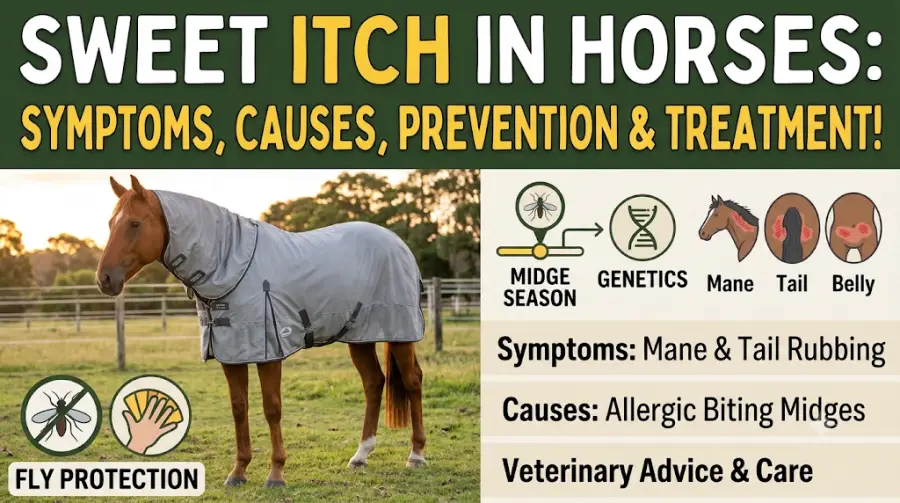
A well-fitted, breathable fly rug can help create a physical barrier between the horse’s skin and biting insects. Choose a design that covers vulnerable areas, including the belly and neck where appropriate.
Check the rug regularly for:
- Rubbing around the shoulders and chest
- Torn or damaged mesh
- Trapped moisture
- Dirt and accumulated sweat
- Pressure points or restricted movement
A rug that does not fit properly can create new skin problems. Remove it as needed to inspect the skin and keep the material clean and dry.
3. Veterinary treatment for itching
When itching is severe, a veterinarian may prescribe medication to control inflammation and discomfort. Depending on the case, treatment may involve anti-inflammatory medication, corticosteroids, antihistamines or suitable topical products.
These treatments are not interchangeable, and they may have limitations or side effects. Do not give human antihistamines or use old veterinary medication without professional advice.
4. Treat damaged or infected skin
Repeated rubbing can create wounds that become infected. If the skin is wet, painful, crusted, swollen or producing discharge, the horse needs veterinary assessment.
A veterinarian may recommend appropriate cleaning, wound care or medication if a secondary infection is present. Treating infection is important, but the underlying insect-triggered allergy also needs to be managed.
5. Discuss longer-term options
For horses with recurring or severe symptoms, ask the veterinarian about a season-long management plan. In selected cases, additional approaches such as immunotherapy may be discussed, although responses can vary and no option should be considered a guaranteed cure.
How to Prevent Sweet Itch
Prevention is usually more effective when it begins before the horse develops intense itching. Waiting until the skin is badly damaged can make the season harder to manage.
1. Plan for the local insect season
Keep a record of when your horse first develops symptoms. If it usually starts itching during a particular period, prepare fly protection and stable arrangements before that time.
Insect activity varies with climate, so use local observations rather than assuming the same calendar applies everywhere.
2. Adjust turnout when practical
Biting midges are often most active around dawn and dusk, although activity varies by species and conditions. Where practical and safe, consider reducing turnout during high-risk periods.
Any change should still allow the horse adequate exercise, social contact and access to forage and water.
3. Improve stable protection
Fine insect mesh over suitable openings can help reduce the number of insects entering a stable. Fans may also help because small midges have difficulty flying in moving air.
Fans and electrical equipment must be installed safely, kept away from chewing and kicking hazards, and used without compromising ventilation or creating overheating risks.
4. Manage the surrounding environment
Reduce avoidable sources of standing water and keep manure and damp organic material managed appropriately. Avoid assuming that every wet patch can be eliminated or that environmental changes alone will prevent all bites.
If possible, discuss turnout locations with your veterinarian, particularly if the horse repeatedly develops symptoms in one area.
5. Use insect repellents carefully
Some approved insect repellents can help reduce bites. Choose products labelled for horses and follow the manufacturer’s directions.
Never apply a repellent to broken or inflamed skin unless your veterinarian confirms that it is suitable. Test and use products according to their instructions, and stop if irritation develops.
6. Check the skin regularly
During the insect season, inspect the mane, tail, neck, belly and other vulnerable areas. Look for early rubbing, broken hair, small bumps and redness.
Taking occasional photographs from the same angle can help you compare changes over time and show your veterinarian how the condition is progressing.
Common Management Mistakes to Avoid
Even well-meaning owners can make sweet itch harder to control by overlooking small details.
Waiting until severe itching begins: Start prevention before the horse develops extensive skin damage.
Using an unsuitable rug: A poorly fitted or wet rug can rub the skin and create discomfort. Check fit and condition frequently.
Applying products to open wounds: Repellents, shampoos and creams may irritate damaged skin. Ask your veterinarian what is safe.
Assuming all itching is sweet itch: Parasites, infections and other allergies can cause similar signs. A correct diagnosis matters.
Changing several things without keeping records: Note which management changes were made and whether they helped. This makes future decisions more useful.
Ignoring secondary infection: Swelling, discharge, heat, pain or worsening sores need veterinary attention.
When Should You Call a Veterinarian?
Contact your veterinarian if the itching is persistent, recurring or causing visible skin damage. Early advice may prevent a mild problem from becoming a more painful one.
Arrange prompt assessment if you notice:
- Open or bleeding skin
- Thick crusts or discharge
- Increasing swelling or warmth
- Severe or continuous rubbing
- Rapid hair loss or spreading lesions
- Signs of pain or marked behavioural change
- No improvement despite reasonable insect-control measures
If the horse develops widespread hives, facial swelling or difficulty breathing after an insect bite or other exposure, seek emergency veterinary help immediately.
Frequently Asked Questions
Is sweet itch contagious between horses?
Sweet itch itself is an allergic reaction, not an infection that spreads directly from one horse to another. However, biting insects can affect multiple horses in the same environment, and susceptible horses may react differently.
Can sweet itch go away permanently?
There is currently no guaranteed permanent cure. Some horses experience changes in severity over time, but many need ongoing seasonal management to reduce exposure and control symptoms.
Does sweet itch only affect horses in summer?
It is commonly associated with warmer periods when biting insects are active. The timing depends on local weather, insect species and geography. Some horses may show symptoms over a longer part of the year.
Can a fly rug help a horse with sweet itch?
A suitable, well-fitted fly rug can reduce insect contact with covered skin. It should be checked frequently for damage, rubbing, moisture and cleanliness.
Is sweet itch the same as an ordinary insect bite?
No. An ordinary bite may cause a small local reaction, while sweet itch is an allergic response that can cause intense, recurring itching and widespread skin damage.
Should I use antihistamines for sweet itch?
Only use medication under veterinary guidance. The appropriate treatment depends on the horse, the severity of the condition and any other health concerns.
Can sweet itch cause hair loss?
Yes. Repeated rubbing and scratching can break or remove hair, especially around the mane and tail. The skin may also become thickened, scaly or infected.
Sweet itch can be frustrating because it often returns when biting insects become active. The repeated itching can damage the mane, tail and skin, making early recognition and consistent management especially important.
Watch for rubbing, hair loss, inflamed skin and recurring seasonal discomfort. Work with your veterinarian to confirm the cause, manage any infection and choose appropriate treatments.
A well-planned routine that combines insect protection, suitable turnout, stable management and regular skin checks can make a meaningful difference to your horse’s comfort. The goal is not simply to stop the itching for a day, but to reduce flare-ups and protect the horse throughout the insect season.