Taking a horse on the road is not always as simple as loading it into a trailer and driving to the destination. Whether you are travelling to a competition, visiting another stable, attending a horse fair or taking your horse for veterinary treatment, preparation makes a real difference.
For many horses, travelling in a trailer is an unfamiliar experience. The movement of the vehicle, changing surroundings, noise and limited space can make some animals nervous. Even a horse that has travelled several times may react differently on another journey.
Good horse trailer safety starts before the journey begins. Owners need to think about the horse’s health, the condition of the trailer, loading practice, ventilation, journey planning and what happens after arrival.
In this guide, we will look at the practical steps that can help make horse transportation safer and more comfortable for both horses and handlers.
Why Is Horse Trailer Safety So Important?
Horses do not naturally understand trailers. A narrow entrance, unfamiliar flooring, moving vehicle and strange sounds can make loading and travelling challenging.
A poorly prepared journey may increase the risk of slipping, falling, panic, overheating, dehydration or injury. Problems can also occur when a trailer has damaged flooring, faulty doors or insufficient ventilation.
It is important to remember that a calm-looking horse is not automatically comfortable. Some horses show stress through sweating, repeated movement, reluctance to load or changes in breathing and behaviour.
Safe transportation involves more than getting the horse from one place to another. It means considering its physical condition and comfort throughout the entire journey.
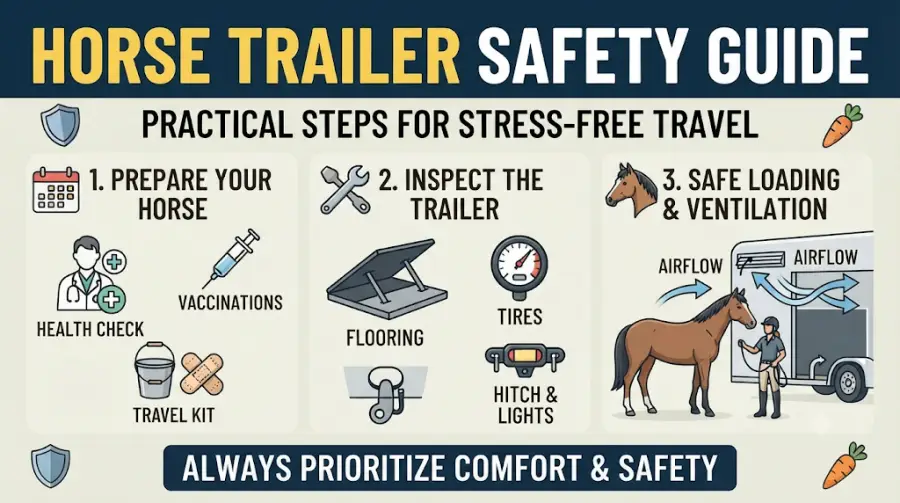
1. Check Your Horse Before Planning the Journey
Before loading your horse, take a few minutes to assess its general condition.
Look for anything unusual, including:
- Reduced appetite or unusual tiredness.
- Lameness or difficulty walking.
- Coughing or unusual nasal discharge.
- Visible wounds or swelling.
- Signs of dehydration.
- Unusual sweating or breathing difficulty.
A horse that is unwell, injured or physically exhausted may not be fit to travel. Contact a veterinarian if you have concerns rather than assuming the horse will be fine once the journey starts.
For longer journeys, planned veterinary advice is particularly useful. Horses with a history of respiratory problems, metabolic conditions or previous transport difficulties may need an individual travel plan.
Also check vaccination and identification records where required by the destination, event or local regulations. Requirements vary by country and location, so do not assume that one set of documents is suitable everywhere.
2. Inspect the Horse Trailer Before Every Trip
One of the biggest mistakes owners can make is assuming that a trailer is safe simply because it worked on the previous journey.
Trailers experience regular movement, weather exposure and wear. A small problem can become a serious safety concern when the vehicle is travelling.
Pay particular attention to the following areas.
Trailer flooring
The floor must be structurally sound and capable of supporting the horse safely. Check for rotten sections, cracks, corrosion, loose boards and weak areas.
If the trailer has rubber mats, lift them periodically to inspect the floor underneath. Moisture and trapped waste can hide deterioration.
Tires and wheels
Inspect all trailer tires, including the spare. Look for visible damage, cracks, uneven wear and incorrect inflation.
Also check wheel security and follow the manufacturer’s maintenance recommendations.
Doors, ramps and partitions
Make sure doors open and close properly. Check hinges, catches, locking mechanisms and ramp supports.
Partitions should be secure and suitable for the horse being transported. There should be no sharp edges, protruding bolts or damaged fittings that could cause injury.
Lights and towing connections
Check brake lights, indicators and other required lights. Inspect the hitch, safety chains, electrical connections and braking system.
If anything looks damaged or unreliable, have it checked by a qualified professional before travelling.
A trailer inspection should be part of every journey routine, not something owners remember only when a problem appears.
3. Help Your Horse Become Comfortable With Loading
For some horses, loading is the most stressful part of travelling.
A horse that has never entered a trailer may hesitate because the space looks unfamiliar or the ramp feels different under its feet. Pulling, shouting or rushing the animal usually makes the experience worse.
Instead, introduce the trailer gradually.
Start by allowing the horse to see and investigate the stationary trailer from a comfortable distance. Give it time to become familiar with the surroundings.
With guidance from an experienced trainer, you can gradually work towards approaching the ramp, standing near the entrance and eventually entering the trailer.
Keep sessions short and calm. Reward relaxed behaviour and avoid turning loading into a battle.
A few important points:
- Practise well before an actual journey.
- Use a suitable, properly fitted headcollar and lead rope.
- Keep the surrounding area quiet and free from unnecessary distractions.
- Avoid standing directly behind a horse that may kick or rush backwards.
- Never place yourself where you could become trapped.
- Do not use force to make a frightened horse enter.
If a horse repeatedly refuses to load, panics or becomes dangerous, seek help from an experienced equine professional.
The goal is not simply to get the horse inside. The goal is to develop a safer and more confident loading experience.
4. Make Sure the Trailer Has Proper Ventilation
Air circulation is essential during horse transportation.
Trailers can become warm, stuffy and uncomfortable, particularly during hot weather or when travelling in heavy traffic. Poor ventilation may increase the risk of heat stress and respiratory irritation.
Before departure, check that all ventilation openings are working and unobstructed.
Consider the following:
- Keep suitable vents open according to the trailer design and weather.
- Make sure windows and openings are protected by appropriate safety guards.
- Avoid blocking ventilation with equipment or stored supplies.
- Monitor the horse’s condition during the journey whenever it is safe to do so.
- Be particularly careful when travelling in hot and humid conditions.
Never assume that a comfortable outside temperature means the inside of the trailer will also remain comfortable.
The horse’s condition, trailer design, journey duration and weather all matter.
5. Prepare the Right Equipment for Horse Travel
A little preparation can prevent unnecessary problems during a journey.
Rather than packing random items at the last minute, maintain a small horse travel kit.
Useful supplies include:
- Clean water and suitable water containers.
- Familiar forage, where appropriate.
- Equine first-aid supplies.
- Spare lead rope and suitable headcollar.
- Relevant identification and health documents.
- Cleaning materials.
- Contact details for your veterinarian.
- Any prescribed medication and veterinary instructions.
Protective equipment such as travel boots or bandages should only be used when correctly fitted and when the horse is accustomed to them. Poorly fitted equipment can create additional problems.
Avoid overloading the trailer with loose equipment. Everything should be stored securely so that it cannot move or fall during travel.
6. Plan the Journey According to Your Horse’s Needs
A journey that looks short on a map may take longer because of traffic, road conditions or unexpected stops.
Plan the route before leaving, especially when transporting a horse over a long distance.
Think about:
- Total travel time.
- Road quality and possible delays.
- Weather conditions.
- Suitable locations for planned breaks.
- Access to water and forage.
- Emergency veterinary contacts along the route.
For longer trips, ask your veterinarian or an experienced transport professional how frequently breaks should be planned.
Break arrangements should allow the horse to be checked and offered appropriate water and forage. Any unloading should take place only in a suitable, secure location with trained handlers.
Never open a trailer door on a busy roadside simply because you want to give the horse a break.
Driving style matters too. Accelerate gradually, brake smoothly and take corners carefully. Sudden movements can make it harder for a horse to maintain its balance.
7. Monitor Your Horse During Transportation
Once the journey begins, do not forget about the animal travelling behind you.
Where a suitable camera or safe monitoring system is available, it can help you observe the horse without repeatedly stopping or opening the trailer.
Watch for unusual behaviour such as:
- Excessive sweating.
- Repeated kicking or scrambling.
- Unusual restlessness.
- Difficulty maintaining balance.
- Signs of breathing distress.
- Unusual weakness or collapse.
If something appears seriously wrong, stop at a safe location and seek appropriate professional assistance.
Never enter a trailer to handle a distressed horse without considering the danger to both the animal and the handler.
8. What Should You Do After Reaching the Destination?
Arrival is not the end of horse transportation safety.
A horse may need time to settle after travelling, especially following a long or stressful journey.
Park in a secure, level location and follow a safe unloading procedure. Make sure the surrounding area is clear before opening the trailer.
After unloading:
- Allow the horse to stand calmly and regain its confidence.
- Offer clean drinking water.
- Observe its walking and general behaviour.
- Check for visible wounds, swelling or unusual discomfort.
- Allow appropriate rest before returning to normal exercise.
- Follow any veterinary advice about feeding, hydration and recovery.
If the horse shows persistent distress, weakness, abnormal breathing, lameness or other concerning symptoms, contact a veterinarian promptly.
Avoid immediately returning to strenuous exercise after a difficult journey. The horse’s recovery should take priority over the original schedule.
9. Common Horse Trailer Safety Mistakes to Avoid
Even experienced owners can overlook small details when preparing for travel.
Here are some mistakes worth avoiding.
Rushing the loading process: A nervous horse needs patience and appropriate training, not unnecessary pressure.
Ignoring trailer maintenance: Weak flooring, faulty brakes and damaged ramps can create serious hazards.
Travelling without checking ventilation: Poor airflow can make a journey uncomfortable, particularly during warm weather.
Using unfamiliar protective equipment: New boots or wraps should not be introduced for the first time immediately before a journey.
Driving aggressively: Sudden braking, sharp turns and excessive speed can affect the horse’s balance.
Forgetting water and travel supplies: Preparation becomes especially important when journeys are longer than expected.
Ignoring post-travel behaviour: A horse that seems tired or uncomfortable after transportation should not automatically be put straight back into its usual workload.
10. Build a Simple Horse Travel Routine
The easiest way to improve horse trailer safety is to create a routine and follow it consistently.
Before every trip, check the horse, inspect the trailer, confirm the equipment and plan the route.
After every trip, clean the trailer, inspect it for damage and record anything that needs attention before the next journey.
A simple written checklist can be particularly useful when several people share responsibility for horse transportation.
It also prevents important details from being forgotten when travelling early in the morning or preparing for a busy event.
Frequently Asked Questions
How do I make my horse comfortable in a trailer?
Introduce the trailer gradually, practise loading before the actual journey and ensure the trailer has suitable space, flooring and ventilation. A calm and familiar routine can also help.
How long can a horse travel in a trailer?
There is no single maximum journey time that is suitable for every horse. Age, health, fitness, previous travel experience, weather and transport conditions all influence what is appropriate. Plan longer journeys with veterinary or professional transport advice.
Should I feed my horse before travelling?
Feeding arrangements depend on the horse, the type of feed and the length of the journey. Maintain appropriate forage access and avoid making sudden dietary changes. Ask your veterinarian for advice if your horse has a medical or digestive condition.
Can a nervous horse travel safely?
Some nervous horses can become more comfortable through gradual loading practice and appropriate professional training. However, a horse that panics or repeatedly attempts to escape should not be forced into travel without addressing the problem.
What should I check before using a horse trailer?
Inspect the flooring, tires, hitch, safety chains, lights, doors, ramps, partitions and ventilation. Any damaged or questionable component should be professionally assessed before use.
Safe horse transportation is not about reaching a destination as quickly as possible. It is about making sure the horse is prepared, the trailer is in good condition and the entire journey is planned around the animal’s needs.
A few minutes spent checking equipment, practising loading and planning the route can prevent avoidable problems later.
Every horse is different. Some travel confidently, while others need more preparation and patience. Pay attention to your horse, learn from each journey and do not hesitate to ask an experienced professional for help when something does not feel right.
A well-prepared journey is a better experience for the horse, the handler and everyone sharing the road.