Horse Vital Signs: Temperature, Pulse & Respiration — Complete Owner Guide
Knowing your horse’s normal temperature, pulse and respiration gives you a useful baseline for spotting illness early. A horse may look almost normal while developing colic, an infection, dehydration, heat stress or another problem. Checking vital signs calmly and recording the results can help you explain what is happening to your veterinarian.
The three basic vital signs
The three routine measurements are:
– **Temperature:** measured with a lubricated digital rectal thermometer.
– **Pulse:** the number of heartbeats per minute.
– **Respiration:** the number of breaths per minute.
A fourth observation—mucous membrane color and capillary refill time—is also useful when assessing an unwell horse, but it should not replace a veterinarian’s examination.
Normal ranges for an adult horse
Typical resting ranges for a healthy adult horse are approximately:
| Measurement | Common resting range |
| Rectal temperature | About 99–101.5°F (37.2–38.6°C) |
| Pulse | About 28–44 beats per minute |
| Respiration | About 8–16 breaths per minute |
These are guide ranges, not rigid pass-or-fail numbers. Age, excitement, exercise, weather, pain, medication and fitness can change the result. A foal may have higher readings than an adult horse.
The most valuable comparison is often with your horse’s own normal resting baseline.
How to take your horse’s temperature
Use a digital thermometer designed for veterinary or household use. Attach a string or clip if appropriate, apply lubricant, stand beside the hindquarters rather than directly behind the horse, and gently insert the thermometer into the rectum. Never force it.
Wait for the thermometer to signal that the reading is complete. Clean and disinfect the thermometer after use.
A temperature can rise temporarily after exercise, transportation, excitement or hot weather. Allow the horse to cool and settle before taking a resting measurement.
When temperature is concerning
Contact your veterinarian promptly if the temperature is clearly above the horse’s normal baseline, especially when paired with depression, poor appetite, cough, nasal discharge, diarrhea, pain or rapid breathing. A very low temperature can also be serious, particularly in a weak, collapsed or shocky horse.
Do not give fever-reducing medication unless your veterinarian directs you to do so. Medication may hide important signs.
How to check pulse
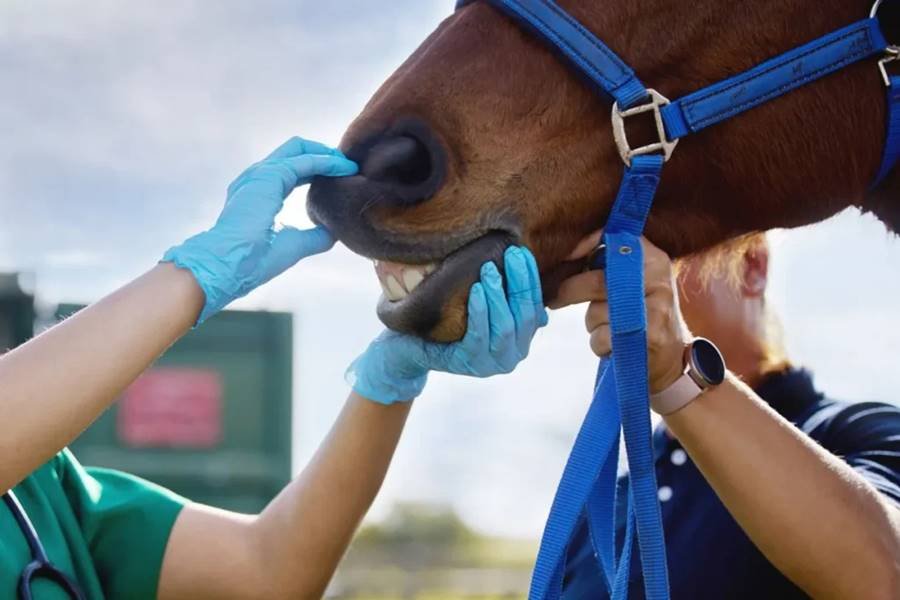
The easiest pulse point for many owners is the facial artery beneath the lower jaw. Slide your fingers into the soft groove just inside the jawbone and feel for a pulse. Use your fingertips, not your thumb.
Count beats for 30 seconds and multiply by two. If the rhythm seems irregular, count for a full 60 seconds.
A stethoscope placed behind the left elbow can also be used to listen to the heart. This takes practice, so ask your veterinarian to demonstrate.
A higher pulse may occur after exercise, fear, pain, heat or dehydration. A persistently elevated resting pulse is especially important when the horse is showing colic signs, sweating unexpectedly, breathing hard or acting dull.
How to count respiration
Stand where you can safely observe the horse’s flank, nostrils or chest movement. One inhalation and one exhalation count as one breath. Count for 30 seconds and multiply by two, or count for a full minute if the rhythm is uneven.
Do not rely only on nostril movement in a windy environment. Watch the whole breathing pattern.
Fast, labored, noisy or shallow breathing can be more important than the number alone. Open-mouth breathing, blue or gray mucous membranes, severe effort or collapse require emergency veterinary attention.
Record the baseline
Create a simple record containing:
– Date and time
– Temperature
– Pulse
– Respiration
– Weather and recent exercise
– Appetite, manure and water intake
– Any unusual behavior
Take readings when the horse is calm and rested. Repeat them at similar times when possible. This makes changes easier to recognize.
Safety and handling tips
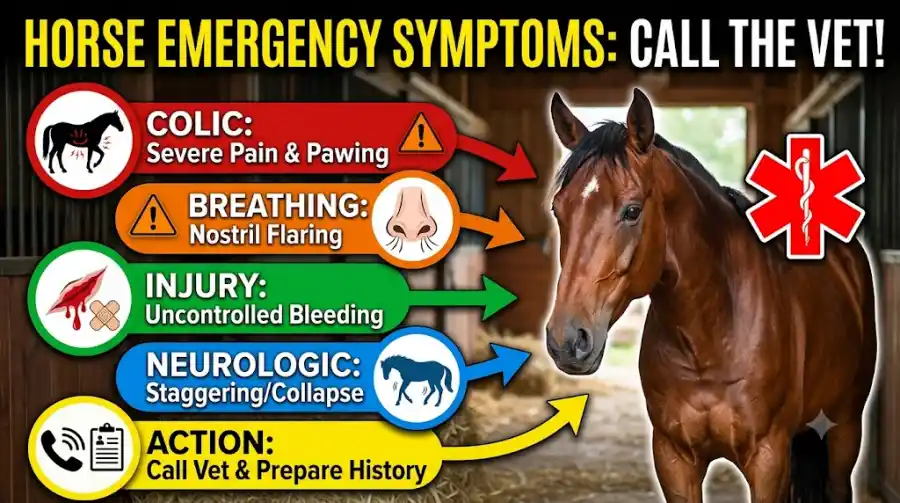
Never take vital signs in a way that puts you at risk. Use a handler for a nervous horse, avoid standing directly behind the hind legs, and stop if the horse becomes dangerous. If the horse is collapsed, severely painful, struggling to breathe or showing neurologic signs, do not delay emergency care while trying to collect every measurement.
When to call the veterinarian
Call urgently for abnormal vital signs combined with:
– Severe or repeated colic signs
– Collapse or inability to stand
– Difficulty breathing
– Profuse sweating without appropriate exercise
– Pale, blue, gray or very dark gums
– Suspected heatstroke
– Severe depression or weakness
– A rapidly worsening condition
When you call, provide the readings, the time taken, recent exercise, medications and other symptoms.
Routine vital-sign checks are a practical part of responsible horse care. Learn your horse’s normal numbers, measure safely, record changes and interpret the readings alongside behavior and other signs. When in doubt, call your veterinarian early rather than waiting for the condition to become obvious.
FAQs
How often should I check my horse’s vital signs?
Healthy horses do not necessarily need a full set every day, but learning the process and checking periodically is useful. Check more often during illness, recovery, extreme weather or after veterinary advice.
Can excitement raise a horse’s pulse?
Yes. Fear, excitement, pain, exercise and heat can all raise pulse and respiration. Allow the horse to settle before judging a resting value.
Is one abnormal number always an emergency?
Not always. Context matters. A mildly elevated pulse after exercise is different from a high pulse in a horse with severe abdominal pain. Persistent or markedly abnormal readings should be discussed with a veterinarian.
Can I use a human thermometer?
A digital thermometer may work if it is safe and suitable for rectal use, but it must be cleaned properly and handled carefully. A veterinary thermometer is often easier to use safely.