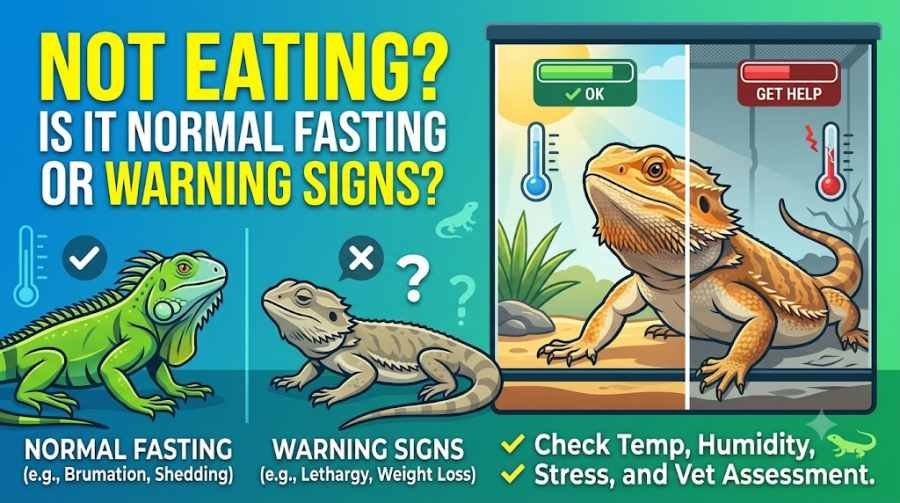
When people search for reptile not eating, they usually want a practical answer they can use today—not a vague list of tips. Why Is My Reptile Not Eating? Normal Fasting vs Warning Signs should be approached as a management question: what does the animal need, what changes should an owner watch for, and when is a normal home-care problem becoming a veterinary or husbandry concern?
Reptiles depend on their environment for much of their thermoregulation. Species-appropriate temperature gradients, humidity, lighting, enclosure design and diet are essential, and a setup that is comfortable for one reptile can be harmful to another. The best plan is therefore not one-size-fits-all. Age, body condition, workload, environment, diet, climate and previous health problems can all change the right approach.
What this means for reptiles
The practical goal with reptile not eating is to create a repeatable routine rather than chase a single “best” trick. Start with the animal’s normal baseline, make one sensible change at a time, and watch the response. If the animal has another medical condition, is pregnant, is very young or old, or is receiving treatment, the plan should be individualized with a veterinarian or qualified animal-health professional.
One useful way to think about the problem is to separate prevention, observation and response. Prevention means providing the correct environment and diet before a problem develops. Observation means noticing changes early. Response means knowing which changes can be monitored and which require professional help. This approach is more reliable than waiting until a symptom is severe and then trying several remedies at once.
Start with the animal’s normal diet
Nutrition works best when the main diet is balanced for the species and life stage. Before adding supplements, identify the base feed, approximate intake, body condition, activity and any veterinary diagnosis. A large number of treats or supplements can make a diet look generous while still being nutritionally unbalanced.
For an owner, the most useful habit is consistency. Check the same basic points at roughly the same time each day, keep the environment predictable, and compare the animal with its own normal behavior rather than with photographs or advice about a different individual. If something changes, note when it started, whether it is getting better or worse, and whether appetite, drinking, movement or behavior changed at the same time. That information can be far more valuable than a guess about the diagnosis.
What the main diet should accomplish
The primary diet should provide the energy, protein, fiber or species-specific nutrients the animal needs. For herbivores, forage and fiber are often central; for dogs and cats, a complete and balanced diet is the foundation; for birds and reptiles, species-appropriate formulated foods and natural feeding patterns matter. Avoid copying a feeding plan from another species or another animal of a different size.
For an owner, the most useful habit is consistency. Check the same basic points at roughly the same time each day, keep the environment predictable, and compare the animal with its own normal behavior rather than with photographs or advice about a different individual. If something changes, note when it started, whether it is getting better or worse, and whether appetite, drinking, movement or behavior changed at the same time. That information can be far more valuable than a guess about the diagnosis.
Portion control and body condition
A feeding guide is a starting point, not a guarantee. Two animals of the same species can have very different energy requirements. Body condition, muscle mass, activity and growth stage should be checked regularly. If weight changes unexpectedly, look for changes in food intake, treats, exercise and health before simply increasing or cutting food.
For an owner, the most useful habit is consistency. Check the same basic points at roughly the same time each day, keep the environment predictable, and compare the animal with its own normal behavior rather than with photographs or advice about a different individual. If something changes, note when it started, whether it is getting better or worse, and whether appetite, drinking, movement or behavior changed at the same time. That information can be far more valuable than a guess about the diagnosis.
Treats, supplements and common mistakes
Treats can be useful for training and enrichment, but they should not displace the nutritionally complete main diet. Supplements should have a clear purpose. More is not automatically better, and some vitamins or minerals can be harmful at excessive doses. Never add a supplement to a sick animal’s diet without considering the underlying condition.
For an owner, the most useful habit is consistency. Check the same basic points at roughly the same time each day, keep the environment predictable, and compare the animal with its own normal behavior rather than with photographs or advice about a different individual. If something changes, note when it started, whether it is getting better or worse, and whether appetite, drinking, movement or behavior changed at the same time. That information can be far more valuable than a guess about the diagnosis.
Freshness, storage and hygiene
Food quality includes storage. Keep dry food protected from moisture and pests, refrigerate appropriate fresh foods, wash food dishes and remove spoiled produce promptly. For animals that pick through mixed diets, watch what is actually eaten rather than what is placed in the bowl.
For an owner, the most useful habit is consistency. Check the same basic points at roughly the same time each day, keep the environment predictable, and compare the animal with its own normal behavior rather than with photographs or advice about a different individual. If something changes, note when it started, whether it is getting better or worse, and whether appetite, drinking, movement or behavior changed at the same time. That information can be far more valuable than a guess about the diagnosis.
Special life stages
Young, pregnant, lactating, senior or medically managed animals can have different nutritional needs. Growth diets, reproduction diets and therapeutic diets should not be interchanged casually. If an animal is losing weight, failing to grow, producing poorly or showing digestive changes, professional assessment is more useful than trial-and-error supplementation.
For an owner, the most useful habit is consistency. Check the same basic points at roughly the same time each day, keep the environment predictable, and compare the animal with its own normal behavior rather than with photographs or advice about a different individual. If something changes, note when it started, whether it is getting better or worse, and whether appetite, drinking, movement or behavior changed at the same time. That information can be far more valuable than a guess about the diagnosis.
How to change a diet safely
When a diet change is appropriate, make it gradually when the species and situation allow. Sudden changes can cause refusal, digestive upset or reduced intake. Keep notes about what was changed and what happened afterward so that you can identify the useful part of the plan.
For an owner, the most useful habit is consistency. Check the same basic points at roughly the same time each day, keep the environment predictable, and compare the animal with its own normal behavior rather than with photographs or advice about a different individual. If something changes, note when it started, whether it is getting better or worse, and whether appetite, drinking, movement or behavior changed at the same time. That information can be far more valuable than a guess about the diagnosis.
When nutrition needs veterinary help
Seek professional advice for persistent weight loss or gain, repeated vomiting or diarrhea, refusal to eat, poor growth, abnormal thirst, reduced production, or any suspected deficiency or toxicity. A balanced diet is part of prevention, but nutrition cannot substitute for diagnosis.
For an owner, the most useful habit is consistency. Check the same basic points at roughly the same time each day, keep the environment predictable, and compare the animal with its own normal behavior rather than with photographs or advice about a different individual. If something changes, note when it started, whether it is getting better or worse, and whether appetite, drinking, movement or behavior changed at the same time. That information can be far more valuable than a guess about the diagnosis.
Practical checklist
- Know what normal appetite, drinking, activity and behavior look like for this individual.
- Keep food and water clean and appropriate for the species and life stage.
- Check housing, temperature, ventilation, flooring and equipment regularly.
- Make changes gradually when the species and situation allow it.
- Record important changes instead of relying on memory.
- Do not use human medicines or another animal’s prescription without veterinary direction.
- Seek professional help when signs are severe, sudden, persistent or worsening.
Evidence-based guidance worth reading
For additional species-specific context, the Merck Veterinary Manual: reptile husbandry is a useful reference: Merck Veterinary Manual: reptile husbandry. The Merck Veterinary Manual: reptile nutrition also provides helpful background for owners: Merck Veterinary Manual: reptile nutrition.
Related reading on TheHorseFacts.com
If you are building a broader animal-care routine, you may also find Avian Diet & Nutrition: Pellets vs. Seeds, Fresh Foods, and Preventing Deficiencies and Top 8 Functional Superfoods for Senior Pets in 2026 useful. These articles cover related owner skills and can help connect this topic with everyday animal care.
Frequently Asked Questions
Is this advice suitable for every reptiles?
No. Species, age, size, climate, diet and health history can change what is appropriate. Use this guide as general education and adapt the plan to the individual animal.
What is the first thing I should check?
Start with the basics: appetite, water intake, behavior, breathing, movement, droppings or manure, and the condition of the housing. These observations establish whether the issue is isolated or part of a wider change.
When should I contact a veterinarian?
Contact a veterinarian when the animal is seriously unwell, rapidly deteriorating, unable to eat or drink normally, struggling to breathe, collapsing, showing severe pain, or displaying another emergency sign. Earlier advice is preferable when you are uncertain.
Can I fix the problem with a supplement?
Sometimes nutrition is part of prevention, but a supplement should not be treated as a universal solution. The correct first step is to identify the animal’s needs and the cause of the problem.
Why Is My Reptile Not Eating? Normal Fasting vs Warning Signs is best approached as a management plan rather than a single trick. Give the animal an appropriate environment, balanced nutrition, clean water, regular observation and species-appropriate enrichment. When something changes, act on the change early and use professional veterinary or husbandry guidance when the situation is beyond routine home care. Good animal care is usually built from many small, consistent decisions—and those decisions become much easier when you know what “normal” looks like.