A horse can look perfectly healthy at first glance and still carry too much body fat or be thinner than it should be. This is one reason why judging a horse’s health by appearance alone can be misleading. Different breeds have different body shapes, winter coats can hide weight changes, and some horses naturally develop more muscle than others.
Learning how to assess a horse body condition score gives owners a more reliable way to monitor these changes. Instead of relying only on the number on a weighing scale, you learn to look at and feel specific areas of the horse’s body.
The good news is that you do not need expensive equipment to begin. With regular observation, a little practice and guidance from an equine professional, body condition scoring can become a useful part of your horse’s routine care.
In this guide, we will explain how the scoring system works, which body areas to examine, what the different scores mean and how to use the information to support your horse’s long-term health.
What Is a Horse Body Condition Score?
A body condition score, commonly called BCS, is a method of estimating how much fat a horse carries on its body.
One widely used method is the Henneke Body Condition Scoring System. It uses a scale from 1 to 9, with 1 representing an extremely thin horse and 9 representing an extremely fat horse.
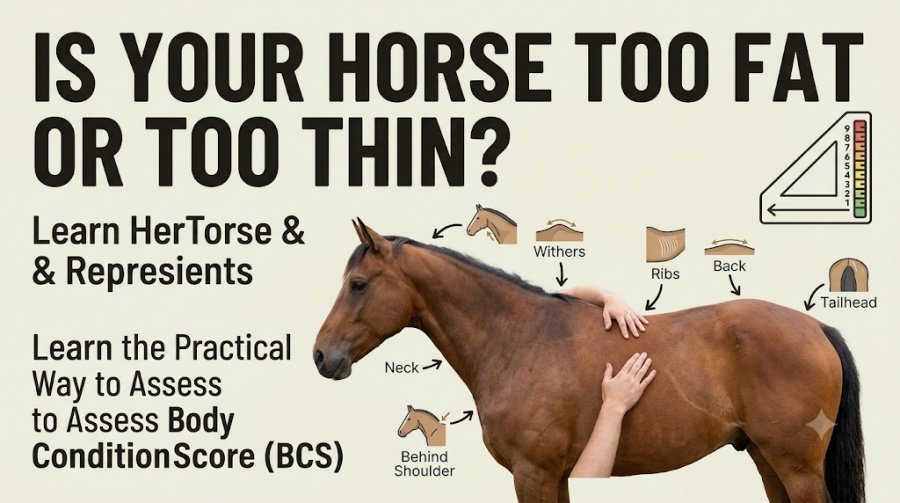
The system looks at fat deposits in six main areas rather than judging the horse’s overall appearance from a distance.
These areas include:
- Neck
- Withers
- Behind the shoulder
- Ribs
- Back or loin
- Tailhead
The important part is that the assessment involves both looking and feeling. A horse may have a thick winter coat that makes it appear heavier than it really is. Similarly, a naturally round belly does not necessarily mean the horse is carrying excessive body fat.
Body condition scoring helps owners notice gradual changes that might otherwise go unnoticed.
Before assessing your horse, it helps to understand what the numbers actually represent.
Understanding the Henneke Body Condition Scoring Scale
Score 1: Extremely Emaciated
A horse with a score of 1 has almost no visible or palpable fat covering.
The ribs, backbone, pelvis and other bony structures are very prominent. The neck and shoulders also appear extremely thin.
This is a serious condition that requires veterinary attention. A severely underweight horse should not simply be given large quantities of feed to gain weight quickly. Its nutritional recovery needs careful professional management.
Score 2: Very Thin
At score 2, the horse remains noticeably underweight.
The ribs and backbone are prominent, and there is very little fat covering the body. The tailhead and pelvic bones are also easy to identify.
A horse in this condition needs a proper assessment to identify possible causes, including dental problems, parasites, illness, inadequate nutrition or difficulty accessing feed.
Score 3: Thin
A horse with a score of 3 has slightly more fat coverage, but its ribs and backbone remain noticeable.
The neck may appear thin, and the bony structures around the hindquarters are still quite visible.
This is generally below the desired condition for most horses and deserves attention.
Score 4: Moderately Thin
At score 4, the horse has some fat coverage, although its body still looks relatively lean.
The outline of the ribs may be faintly visible, and the back may show a slight ridge.
Depending on the horse’s breed, discipline and individual circumstances, this score may be acceptable in some situations. It should still be monitored.
Score 5: Moderate or Ideal
A score of 5 is commonly considered an ideal body condition for many adult horses.
The ribs are not usually visible, but they can be felt without excessive pressure. The back appears relatively level, and the neck blends smoothly into the shoulders.
The horse looks neither noticeably thin nor excessively fleshy.
Score 6: Moderately Fleshy
A horse with a score of 6 carries slightly more fat than one with a score of 5.
The ribs can still be felt, although more pressure may be required. Some fat deposits may be noticeable around the neck, shoulders and tailhead.
This score can be acceptable for certain horses, but it is worth monitoring to prevent further unnecessary weight gain.
Score 7: Fleshy
At score 7, fat deposits become more noticeable.
The ribs are difficult to feel, the neck may become thicker, and fat can accumulate behind the shoulders and around the tailhead.
This level of body condition may increase health risks, particularly for horses prone to metabolic problems.
Score 8: Fat
A horse with a score of 8 has substantial fat deposits.
The ribs are difficult to feel, the neck becomes noticeably thick, and fat may accumulate around the withers, shoulders and tailhead.
There may also be a visible crease along the back.
This condition deserves attention because excessive body fat can affect mobility, exercise tolerance and metabolic health.
Score 9: Extremely Fat
Score 9 represents severe obesity.
Large fat deposits are visible around the neck, back, tailhead and other areas. The ribs are difficult to identify by touch, and the horse may have a pronounced crease along its back.
A veterinary professional or equine nutritionist should help develop a safe weight-management plan.
The descriptions above summarize the Henneke system. Individual interpretation should account for conformation, muscle development, age and other factors.
The Six Areas to Check When Assessing Your Horse
The most useful part of body condition scoring is learning where to look and what to feel.
1. Check the Neck
Start by examining the neck from the side and gently feeling along its crest.
A healthy, moderate-condition horse generally has a neck that blends naturally into the shoulders.
Excessive fat may create a thick, firm-looking crest. A very thin horse, on the other hand, may have a narrow neck with little soft tissue.
Pay attention to changes over time rather than making a decision from one observation.
2. Examine the Withers
The withers are the area between the horse’s shoulder blades.
In a lean horse, the underlying bones may appear prominent. As fat accumulates, the area becomes more rounded.
Feel around the withers gently to understand whether the shape comes from normal anatomy, muscle or fat deposits.
3. Look Behind the Shoulders
The area immediately behind the shoulder can provide useful information about fat distribution.
A horse carrying excess body fat may develop noticeable deposits in this region.
Compare both sides of the horse and consider its natural conformation before assigning a score.
4. Feel the Ribs
The rib area is one of the most important places to assess.
Place your hands gently along the horse’s side and feel for the ribs.
In a moderate-condition horse, the ribs should generally be easy to feel without being visibly prominent.
If the ribs are very difficult to feel, the horse may be carrying excessive fat. If they are sharply visible and prominent, the horse may be too thin.
5. Examine the Back and Loin
Look along the horse’s back from the side and behind.
A pronounced ridge may suggest inadequate fat coverage, while a noticeable crease down the back can be associated with excess fat.
However, posture, muscle development and conformation can affect the appearance of this area.
6. Check the Tailhead
Finally, examine the area around the base of the tail.
In a horse with moderate body condition, this area generally has some soft covering without excessive bulging.
Heavy fat deposits around the tailhead may indicate that the horse is carrying more weight than desirable.
How Often Should You Check Your Horse’s Body Condition?
There is no need to perform an elaborate assessment every day. However, regular checks make it easier to notice gradual changes.
For many owners, assessing body condition approximately once a month is a practical starting point.
You can also check more frequently when:
- Your horse’s feeding routine changes.
- Exercise levels increase or decrease.
- The horse is recovering from illness.
- Seasonal pasture conditions change.
- The horse is getting older.
- You notice unexplained weight loss or gain.
Try to assess your horse under similar conditions each time. This makes comparisons more meaningful.
Keeping a simple record of the date, estimated score and observations can be surprisingly useful.
What Causes Horses to Become Overweight or Underweight?
Body condition is influenced by more than just the amount of food in a bucket.
Several factors can contribute to weight changes.
Feeding habits: Providing more calories than a horse uses can gradually lead to excess body fat. Concentrates, treats and unrestricted access to rich pasture may all contribute.
Exercise levels: A horse that becomes less active may need a different feeding plan. Continuing the same diet without considering reduced activity can lead to weight gain.
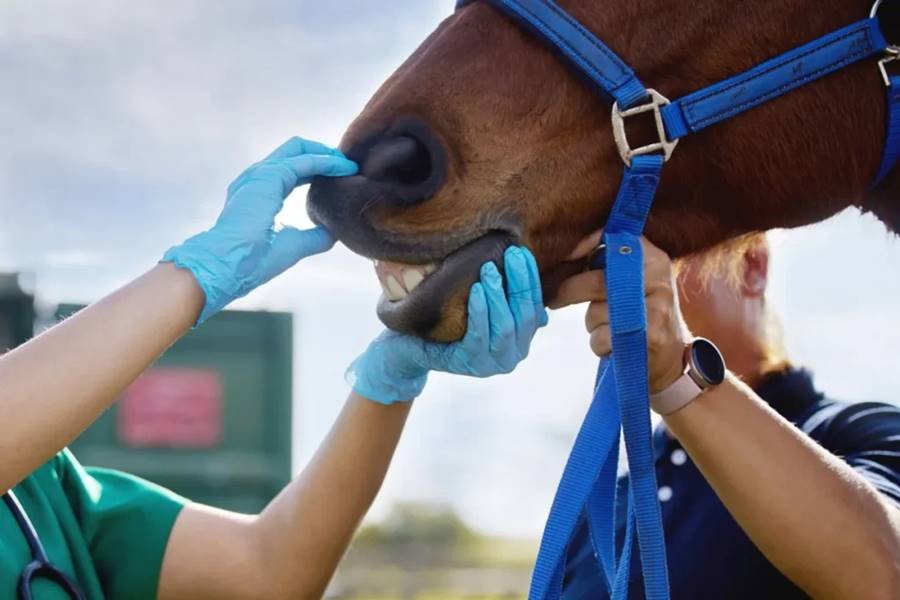
Dental problems: Horses with painful teeth may struggle to chew properly. This can interfere with eating and contribute to weight loss.
Age: Older horses may experience changes in digestion, dental health, mobility and muscle condition.
Parasites and illness: Internal parasites and other medical conditions can affect appetite, nutrient absorption and body weight.
Individual differences: Breed, genetics, workload and metabolic health all influence how a horse maintains its condition.
If a horse loses or gains weight unexpectedly, it is better to investigate the reason than simply change its feed.
How Can You Maintain a Healthy Body Condition?
Maintaining a healthy body condition is about creating a feeding and exercise routine that suits the individual horse.
Here are some practical habits worth following.
Provide Appropriate Forage
Good-quality forage should form the foundation of most horses’ diets.
Hay and pasture provide fibre that supports normal digestive function. However, forage quality and quantity should be appropriate for the horse’s body condition and nutritional needs.
Avoid making major feeding changes without understanding the horse’s requirements.
Monitor Treats and Concentrates
Treats are enjoyable, but they should not become a large part of the daily diet.
Similarly, not every horse needs the same amount of grain or concentrate. Some horses maintain their condition perfectly well with a forage-based diet, while others have additional nutritional requirements.
Maintain Regular Exercise
Movement supports muscle development, fitness and general well-being.
The exercise routine should match the horse’s age, health, training level and physical ability.
For an overweight horse, a gradual and appropriate exercise programme may help. However, do not start strenuous exercise with a horse that is unfit or has an underlying medical problem.
Keep Track of Weight Changes
A weight tape can help monitor changes over time, although it does not provide a perfectly accurate measurement.
Use it alongside body condition scoring rather than treating either measurement as a complete picture of health.
Schedule Veterinary Checks
Regular veterinary care helps identify problems that may affect body condition.
If a horse is losing weight despite eating normally, or gaining weight unexpectedly, a veterinary examination can help identify underlying causes.
Common Mistakes Owners Make When Assessing Body Condition
Even experienced owners can misjudge a horse’s condition.
Here are a few mistakes worth avoiding.
Judging only by appearance: A thick winter coat can hide ribs and changes in body shape. Always include a hands-on assessment where safe.
Confusing a large belly with excess fat: A horse can have a large-looking abdomen while having relatively little fat covering its ribs and back. Body condition scoring is about fat deposits, not belly size alone.
Ignoring muscle development: A horse with well-developed muscles may look different from one with less muscle, even when their fat coverage is similar.
Using the same feeding plan for every horse: Two horses of similar size can have very different nutritional requirements.
Trying to change weight too quickly: Sudden dietary changes can be harmful. Severely underweight horses may be at risk of serious complications during refeeding, so professional guidance is essential.
When Should You Ask a Veterinarian for Help?
Body condition scoring is a monitoring tool, not a substitute for veterinary diagnosis.
Contact a veterinarian if your horse experiences:
- Sudden or unexplained weight loss.
- Rapid weight gain.
- Persistent poor appetite.
- Difficulty chewing or swallowing.
- Reduced energy or unusual behaviour.
- Visible muscle loss.
- Signs of pain or digestive problems.
- A very low or very high body condition score.
A veterinarian can assess the horse’s overall health and help determine whether dietary changes, diagnostic tests or further treatment are needed.
Frequently Asked Questions
What is the ideal body condition score for a horse?
A score of 5 is commonly considered ideal for many adult horses. Scores around 4–6 are often considered an acceptable range, although individual needs can vary.
How do I know if my horse is overweight?
Look for excessive fat deposits around the neck, ribs, shoulders, back and tailhead. If the ribs are difficult to feel and fat deposits are noticeable, your horse may be overweight.
Can a horse be overweight even if it exercises regularly?
Yes. Exercise is beneficial, but a horse can still consume more calories than it uses. Diet, workload and individual metabolism all influence body condition.
Does a weight tape give an accurate horse weight?
A weight tape provides an estimate rather than an exact measurement. It is most useful for monitoring trends when used consistently.
Should I change my horse’s diet if its body condition score increases?
Do not make drastic changes immediately. Review forage, pasture access, treats and exercise, and seek advice from a veterinarian or qualified equine nutritionist before making significant dietary adjustments.
Understanding your horse’s body condition is one of those simple management skills that can make a meaningful difference over time.
The Henneke scoring system gives owners a practical way to look beyond appearances and assess fat coverage in specific areas of the body. With regular checks, you can identify gradual changes, discuss concerns with your veterinarian and make more informed decisions about feeding and exercise.
Remember, the goal is not to make every horse look identical or achieve one number at any cost. It is to maintain a healthy condition that suits the individual horse’s age, breed, workload and overall needs.
A few minutes of careful observation each month can help you understand your horse better and support its long-term health.