Horses are natural grazers. In the wild, they don’t usually eat one or two big meals and then go hours without food. Instead, they spend most of their day slowly moving, nibbling, and grazing small amounts of forage.
That’s why feeding frequency is such an important part of horse care.
But how often should you actually feed a horse? Is twice a day enough? Should hay be available all the time? And what about grain or concentrates?
The truth is, there’s no single perfect answer. It depends on the individual horse, its workload, body condition, and how it’s managed. But once you understand how horses naturally eat, it becomes much easier to build a healthy feeding routine.
What Is a Horse’s Natural Feeding Pattern?
Horses are built to eat little and often.
In natural conditions, they can spend around 12–15 hours a day grazing when forage is available. Some studies and extension resources even suggest it can be closer to 14–15 hours of grazing behavior in a 24-hour period.
That doesn’t mean a horse is constantly eating without pause, but it does highlight an important idea:
Horses are designed for near-constant access to forage, not large, infrequent meals.
Their digestive system works best when food is moving through it regularly, which is why feeding management plays such a big role in overall health.
How Many Times a Day Should You Feed a Horse?
There’s no one-size-fits-all feeding schedule.
In general, forage (hay or pasture) should make up the majority of a horse’s diet, and the goal should be to avoid long gaps without something to chew on.
If a horse doesn’t have access to pasture, hay is usually split into multiple feedings throughout the day. For many stabled horses, two to three hay feedings per day is a common starting point.
Some horses may need even more frequent access to forage, especially if they finish meals quickly.
A good feeding schedule depends on:
- Age and size of the horse
- Body condition (overweight or underweight)
- Workload and activity level
- Type and quality of forage
- Pasture availability
- Whether concentrates are fed
- Overall health and dental condition
- Stable routine and management
Is Feeding a Horse Twice a Day Enough?
Twice-a-day feeding is very common, especially in boarding barns. But whether it’s enough really depends on what happens between those meals.
If a horse eats all its hay quickly and then has nothing to chew on for several hours, that’s not ideal. On the other hand, a horse with pasture access or slow-feeding systems may be perfectly fine.
The key isn’t just how many times you feed—it’s how long the horse has access to forage throughout the day.
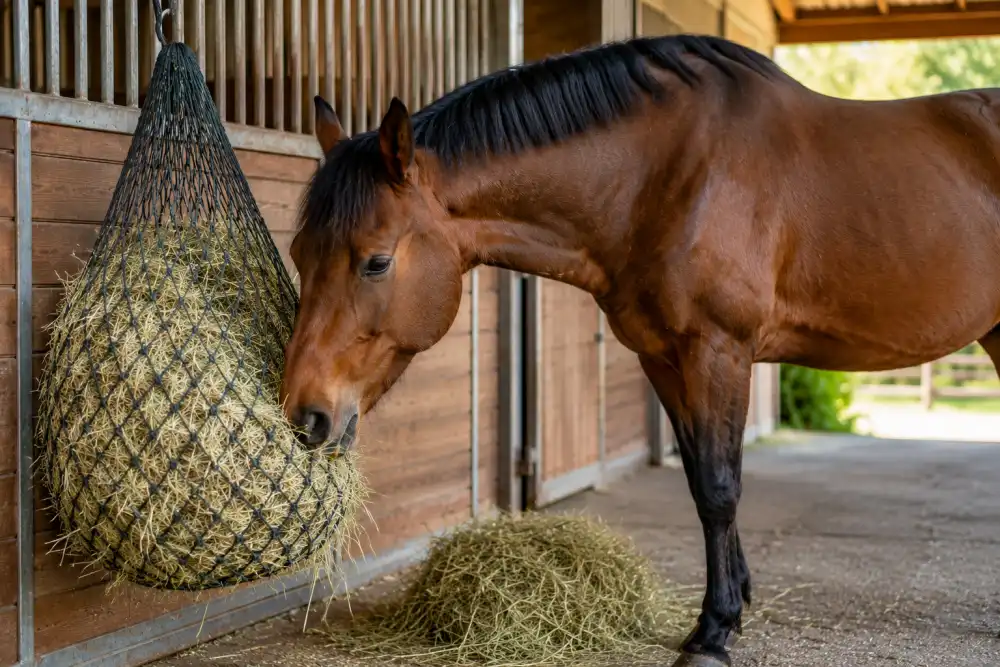
Research on slow-feed hay nets has shown they can significantly increase the time horses spend eating, helping mimic more natural grazing behavior.
How Often Should You Feed Hay?
Hay is the foundation of most horse diets when pasture isn’t sufficient.
Instead of offering the full daily amount at once, it’s usually better to divide it into several portions to keep the horse eating steadily throughout the day.
A simple example might look like this:
Morning: Hay
Midday: Hay
Evening: Hay
Late evening (if needed): Additional hay
Of course, this will vary depending on the horse.
Some horses do well with free-choice hay, while others—especially easy keepers—need carefully measured portions to prevent weight gain.
Should Horses Have Hay Available All Day?
In many cases, yes—continuous forage access is ideal because it closely matches how horses naturally eat.
However, free-choice hay isn’t right for every horse.
Some horses will overeat if given unlimited access, especially those prone to weight gain. In those cases, owners need to balance two goals:
- Avoid long periods without forage
- Prevent excessive calorie intake
Slow-feed hay nets or controlled portions can help strike that balance by stretching out eating time without increasing total hay intake too much.
How Often Should You Feed Grain?
Grain and concentrates are different from forage and should be treated more carefully.
Not every horse needs grain at all. Many horses maintain good health on forage alone.
When concentrates are required, they should be split into smaller meals rather than given in large amounts at once.
As a general guideline, nutrition experts often recommend not feeding more than about 0.3–0.4% of a horse’s body weight in grain per meal. For a 1,000-pound horse, that’s roughly 3–4 pounds per feeding.
That said, always follow the instructions on the specific feed you’re using, since formulations vary widely.
Why You Should Avoid Large Meals
Horses aren’t designed to handle big, infrequent meals.
Their digestive system works best with steady intake of forage rather than large spikes of feed.
Feeding too much at once—especially grain—can also increase the risk of digestive upset and make it harder to maintain a balanced diet.
A better approach is to:
- Base the diet on forage
- Measure feed carefully
- Split concentrates into smaller meals
- Make changes gradually
- Monitor body condition regularly
- Adjust based on the individual horse
What Does a Typical Horse Feeding Schedule Look Like?
Here’s a simple example of a stable feeding routine:
| Time | Feeding |
|---|---|
| 7:00 AM | Hay + grain (if needed) |
| 11:00 AM | Hay |
| 3:00 PM | Hay or turnout/pasture |
| 7:00 PM | Hay + grain (if needed) |
| 10:00 PM | Extra hay (if appropriate) |
This is just an example—not a rule.
Some horses do well with fewer feedings, while others benefit from more frequent forage access. The goal is always consistency and adequate forage availability.
Feeding a Horse With Pasture Access
Horses on good pasture often spend much of the day grazing naturally, which already mimics their natural feeding behavior.
In these cases, the need for additional hay depends on:
- Pasture quality and growth
- Season and weather
- Time spent grazing
- Horse’s body condition
- Nutritional needs
Keep in mind that lush pasture can be very energy-dense, so some horses may actually gain weight quickly if not monitored.
Feeding a Stabled Horse
Stabled horses usually have fewer natural grazing opportunities, so feeding management becomes even more important.
Instead of giving large meals, it helps to spread forage out and extend eating time.
Options include:
- Multiple hay feedings per day
- Slow-feed hay nets
- Hay feeders that reduce waste
- Overnight forage access
- Regular turnout when possible
The goal is simple: keep the horse chewing as much of the day as safely possible.
Feeding Before Exercise
Feeding around exercise depends on the horse and the type of work it’s doing.
In general:
- Avoid large meals right before intense exercise
- Allow time for digestion after feeding concentrates
- Light forage is usually fine closer to work
For performance horses, it’s best to follow a consistent routine and avoid sudden changes before training or competition.
When in doubt, a vet or equine nutritionist can help fine-tune timing.
Should You Feed at the Same Time Every Day?
Yes—consistency matters.
Horses are creatures of habit, and a regular feeding schedule helps reduce stress and makes it easier to notice changes in behavior or appetite.
A consistent routine also helps you spot early warning signs like:
- Reduced appetite
- Changes in manure
- Weight loss or gain
- Unusual behavior at feeding time
If a horse suddenly stops eating or shows a noticeable change in appetite, it should never be ignored.
What Happens If a Horse Goes Too Long Without Food?
Long gaps without forage aren’t ideal for horses.
When a horse goes too long without eating, it can affect both behavior and digestive health.
That’s why many management systems try to avoid long “empty” periods by using:
- Multiple hay feedings
- Slow feeders
- Pasture turnout
- Overnight forage
The goal is to keep the digestive system working steadily, as it would in a natural grazing environment.
Feeding an Overweight Horse
An overweight horse still needs regular forage—it just needs to be managed carefully.
The focus should be on:
- Controlling total calories
- Choosing appropriate hay
- Limiting unnecessary grain
- Increasing exercise where possible
- Using slow-feeding methods
Simply cutting off food for long periods is not a healthy weight-loss strategy.
Feeding a Horse That Needs to Gain Weight
If a horse is underweight, the first step is always to find out why.
Possible causes include:
- Poor-quality forage
- Dental issues
- Parasites
- Illness or stress
- Not enough calories overall
Once the cause is addressed, the diet can be adjusted to support healthy weight gain.
This may involve higher-quality forage, added concentrates, or more frequent feeding—but it should always be done gradually.
How to Change a Horse’s Feeding Schedule
Any changes to feed should be made slowly.
A horse’s gut bacteria need time to adjust, and sudden changes can cause digestive upset.
A safe approach is to:
- Introduce new feed gradually
- Monitor manure consistency
- Watch appetite closely
- Adjust slowly over several days
- Avoid sudden increases in grain
- Always provide fresh water
Signs Your Horse’s Feeding Routine May Need Attention
Watch for changes such as:
- Leaving feed behind
- Eating too quickly or too slowly
- Sudden refusal to eat
- Weight changes
- Changes in manure
- Increased wood chewing or boredom behaviors
- Changes in drinking habits
These signs don’t always mean the feeding schedule is wrong, but they do mean something may need attention.
If a horse suddenly stops eating, always contact a veterinarian.
Frequently Asked Questions
How often should you feed a horse?
Most horses do best with frequent access to forage throughout the day. When pasture isn’t available, hay is usually divided into multiple feedings.
Is feeding a horse twice a day enough?
It can be, but only if the horse still has enough forage between meals. Some horses need more frequent access.
How many times a day should I feed hay?
There’s no fixed number. The goal is to avoid long gaps without forage.
Should horses have hay overnight?
Yes, in many cases overnight forage helps prevent long fasting periods.
Do horses need grain every day?
No. Many horses do well on forage alone.
What’s the best feeding time for horses?
There’s no perfect time—consistency matters more than exact timing.
Can I change feeding suddenly?
No. Changes should always be gradual to protect digestive health.
Feeding a horse isn’t just about filling a bucket twice a day—it’s about understanding how horses are designed to eat.
The closer we can get to their natural grazing pattern, the healthier and more comfortable they tend to be.
For most horses, that means:
- Forage as the foundation
- Frequent access to food
- Controlled, consistent feeding routines
- Adjustments based on the individual horse
And when things get complicated, a vet or equine nutritionist is always the best guide.