Horses are remarkably good at regulating body temperature, but extreme heat and humidity can overwhelm their cooling system. Summer management becomes especially important when a horse is exercising, sweating heavily or living in a hot, poorly ventilated environment.
The goal is not simply to make a horse feel cooler. It is to help the horse drink enough, lose heat safely and avoid heat stress.
1. Provide Plenty of Clean Water
Water is the foundation of summer horse care. A horse needs a consistent supply of clean, fresh drinking water, and requirements can rise considerably when temperatures increase or the horse is sweating.
Check buckets and troughs frequently. A water source that is technically available is not useful if it is dirty, excessively warm, blocked or unfamiliar to the horse.
The Horse’s January 2026 hydration guidance notes that simply providing water does not guarantee that every horse will drink enough.
2. Make Shade Available
Natural shade from trees or a properly designed shelter can give horses an important break from direct sunlight. Make sure the shaded area has enough room for all horses to use it without excessive competition.
During the hottest part of the day, check whether the horse is actually using the available shade.
3. Improve Airflow
Air movement helps heat leave the horse’s body and can make hot conditions more manageable.
In barns, use safe ventilation and fans where appropriate. Fans should be installed and maintained so horses cannot reach electrical components or cords.
4. Avoid the Hottest Exercise Periods
If possible, schedule strenuous work for cooler parts of the day. Early morning or later evening may be more comfortable than the hottest afternoon period, although local weather conditions should guide the decision.
Humidity matters too. Sweat cools a horse most effectively when it can evaporate. High humidity makes evaporation less effective and can increase heat stress risk.
5. Watch the Heat and Humidity Together
A temperature reading alone does not tell the whole story.
Humidity, solar radiation, wind and exercise intensity all influence how difficult it is for a horse to lose heat. Recent 2026 guidance from The Horse specifically discusses why humidity changes the heat risk for horses.
6. Cool a Sweaty Horse Properly
After exercise, allow the horse to cool down while monitoring breathing, sweating and overall behavior.
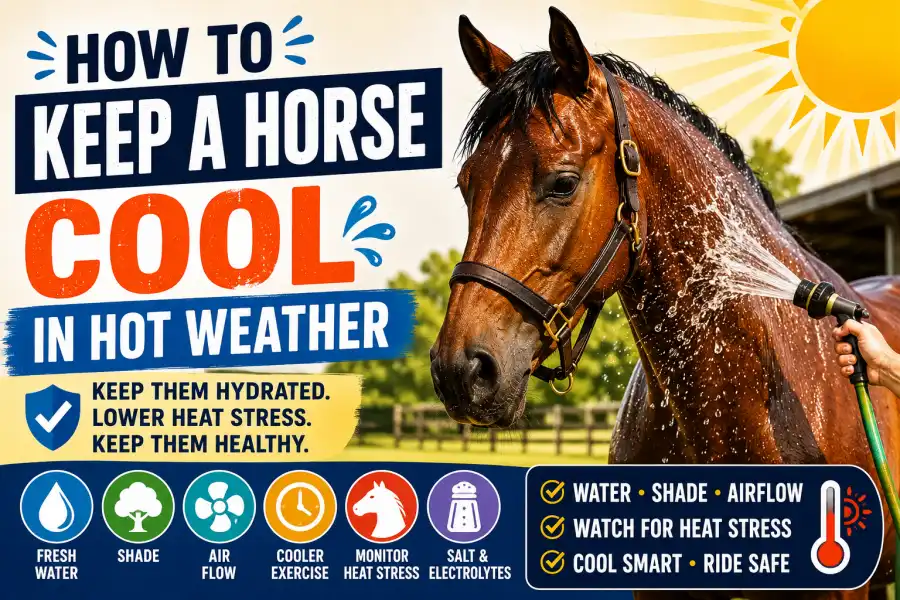
Cool water can be used to help conduct heat away from the body. Current equine heat-management guidance supports using water to cool an overheated horse while continuing to monitor the horse closely.
Do not assume that a horse is safe simply because its skin feels cooler. Watch the horse’s breathing, demeanor and temperature when appropriate.
7. Provide Salt and Consider Electrolytes When Appropriate
Sweating causes loss of sodium, chloride and other electrolytes. Horses that sweat heavily may therefore need electrolyte replacement in addition to ordinary hydration.
Free-choice salt can be useful, but a hard-working horse with substantial sweat losses may need a more deliberate electrolyte plan. Discuss the appropriate product and amount with your veterinarian or equine nutritionist.
8. Pay Extra Attention to Vulnerable Horses
Some horses deserve closer monitoring in hot weather, including very young horses, older horses, overweight horses, poorly conditioned horses and horses with health problems.
Track body condition, appetite, water intake and behavior. University of Minnesota Extension recommends paying particular attention to bodyweight and feed intake during hot weather.
9. Know the Signs of Heat Stress
Possible signs include:
- profuse sweating;
- rapid breathing;
- increased heart rate;
- tiredness or weakness;
- reduced appetite;
- dehydration;
- an unusually high rectal temperature;
- abnormal behavior or distress.
Heatstroke is an emergency. If you suspect severe heat stress or heatstroke, contact your veterinarian immediately.
10. Keep the Horse’s Routine Consistent
Horses often cope better when feeding, turnout, exercise and hydration routines are predictable. During a heatwave, avoid unnecessary changes and monitor the horse more frequently.
What Not to Do During Extreme Heat
- Do not restrict access to drinking water.
- Do not exercise a horse hard during dangerous heat and humidity.
- Do not rely on electrolytes instead of water.
- Do not ignore a horse that suddenly stops sweating or becomes distressed.
- Do not assume a horse is fine simply because other horses appear comfortable.
Quick Summer Cooling Checklist
- Fresh water available.
- Shade available.
- Safe airflow or ventilation.
- Exercise scheduled around heat conditions.
- Horse monitored for sweating and heat stress.
- Salt available.
- Electrolytes considered when sweat losses are significant.
- Emergency veterinary contact information available.
Frequently Asked Questions
What is the best way to keep a horse cool?
Provide fresh water, shade, airflow and sensible exercise management. When a horse is hot after exercise, appropriate water cooling and close monitoring can also help.
Should I hose my horse down in hot weather?
Water can help transfer heat away from a horse’s body. Use safe cooling practices and continue monitoring the horse rather than relying on hosing alone.
Does humidity make horses hotter?
High humidity makes sweat evaporation less effective, which can make it harder for a horse to dissipate body heat.
When should I call a veterinarian?
Call promptly if your horse shows signs of severe heat stress, heatstroke, unusual weakness, distress, abnormal coordination, or stops sweating while dangerously hot.
The best summer cooling plan is a combination of water, shade, airflow, sensible exercise and close observation. Electrolytes can be useful when sweat losses are significant, but they are only one part of the plan.
During a serious heat event, your horse’s behavior, breathing, sweating and overall condition matter more than a single thermometer reading.