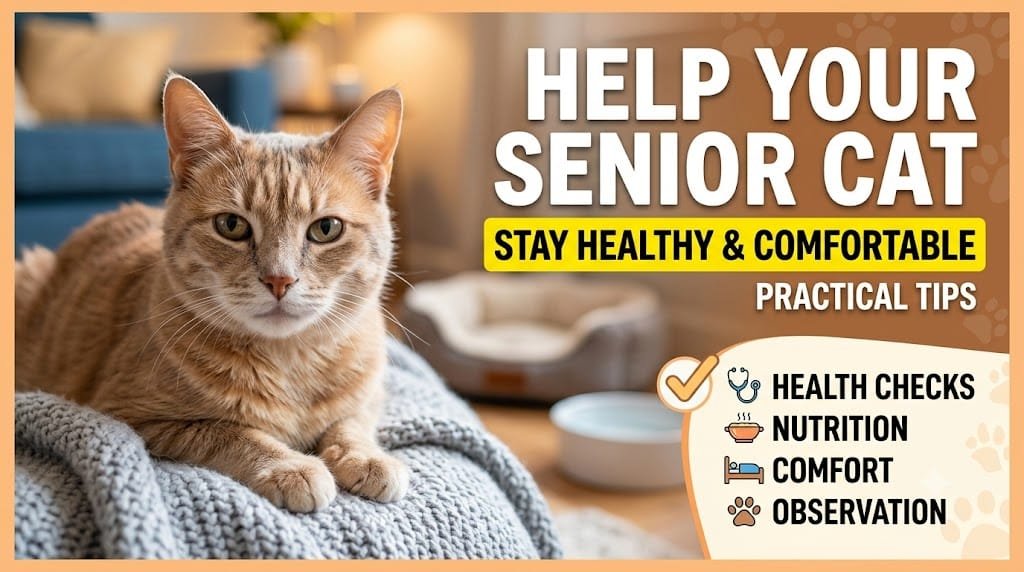
When people search for senior cat care, they usually want a practical answer they can use today—not a vague list of tips. How to Help a Senior Cat Stay Healthy and Comfortable should be approached as a management question: what does the animal need, what changes should an owner watch for, and when is a normal home-care problem becoming a veterinary or husbandry concern?
Cats often hide discomfort, so small changes in appetite, litter-box habits, grooming, movement or social behavior can be useful clues. Indoor cats also need opportunities to move, hunt, climb, scratch and make choices within a safe environment. The best plan is therefore not one-size-fits-all. Age, body condition, workload, environment, diet, climate and previous health problems can all change the right approach.
What this means for cats
The practical goal with senior cat care is to create a repeatable routine rather than chase a single “best” trick. Start with the animal’s normal baseline, make one sensible change at a time, and watch the response. If the animal has another medical condition, is pregnant, is very young or old, or is receiving treatment, the plan should be individualized with a veterinarian or qualified animal-health professional.
One useful way to think about the problem is to separate prevention, observation and response. Prevention means providing the correct environment and diet before a problem develops. Observation means noticing changes early. Response means knowing which changes can be monitored and which require professional help. This approach is more reliable than waiting until a symptom is severe and then trying several remedies at once.
Why early recognition matters
Animals often hide illness until a problem is significant. Owners therefore need to know what normal looks like: normal appetite, activity, breathing, droppings or manure, grooming, movement and social behavior. A single unusual moment may mean little, but a persistent change deserves attention.
For an owner, the most useful habit is consistency. Check the same basic points at roughly the same time each day, keep the environment predictable, and compare the animal with its own normal behavior rather than with photographs or advice about a different individual. If something changes, note when it started, whether it is getting better or worse, and whether appetite, drinking, movement or behavior changed at the same time. That information can be far more valuable than a guess about the diagnosis.
The signs owners can check at home
A calm daily observation can include appetite, water intake, body condition, movement, eyes, mouth, skin or feathers, droppings, and behavior. Avoid forcing an examination that could injure the animal. The goal is to notice changes and communicate them clearly to a professional.
For an owner, the most useful habit is consistency. Check the same basic points at roughly the same time each day, keep the environment predictable, and compare the animal with its own normal behavior rather than with photographs or advice about a different individual. If something changes, note when it started, whether it is getting better or worse, and whether appetite, drinking, movement or behavior changed at the same time. That information can be far more valuable than a guess about the diagnosis.
Common causes are not always obvious
The same visible sign can have several causes. Poor appetite might reflect pain, dental disease, stress, heat, infection, diet problems or a gastrointestinal disorder. A cough or breathing change may have environmental, infectious or structural causes. That is why a symptom list should be used to decide when to seek help, not as a substitute for diagnosis.
For an owner, the most useful habit is consistency. Check the same basic points at roughly the same time each day, keep the environment predictable, and compare the animal with its own normal behavior rather than with photographs or advice about a different individual. If something changes, note when it started, whether it is getting better or worse, and whether appetite, drinking, movement or behavior changed at the same time. That information can be far more valuable than a guess about the diagnosis.
What owners should avoid
Do not give leftover human medicines, random antibiotics, unlabelled supplements or another animal’s prescription. Do not delay professional care because an internet remedy sounds harmless. Some species metabolize medicines differently, and some conditions become harder to treat after a delay.
For an owner, the most useful habit is consistency. Check the same basic points at roughly the same time each day, keep the environment predictable, and compare the animal with its own normal behavior rather than with photographs or advice about a different individual. If something changes, note when it started, whether it is getting better or worse, and whether appetite, drinking, movement or behavior changed at the same time. That information can be far more valuable than a guess about the diagnosis.
Keep a simple health record
Record weight when practical, appetite changes, medication given by a veterinarian, vaccination or parasite-control dates, unusual behavior and the date a symptom began. Photos or short videos can be especially useful for movement, breathing, eating or behavioral changes.
For an owner, the most useful habit is consistency. Check the same basic points at roughly the same time each day, keep the environment predictable, and compare the animal with its own normal behavior rather than with photographs or advice about a different individual. If something changes, note when it started, whether it is getting better or worse, and whether appetite, drinking, movement or behavior changed at the same time. That information can be far more valuable than a guess about the diagnosis.
Prevention is easier than crisis management
Routine preventive care, clean housing, appropriate nutrition, parasite control where relevant, dental or hoof care where relevant, and safe environmental conditions reduce avoidable problems. Prevention should be species-specific rather than based on a generic pet checklist.
For an owner, the most useful habit is consistency. Check the same basic points at roughly the same time each day, keep the environment predictable, and compare the animal with its own normal behavior rather than with photographs or advice about a different individual. If something changes, note when it started, whether it is getting better or worse, and whether appetite, drinking, movement or behavior changed at the same time. That information can be far more valuable than a guess about the diagnosis.
When the situation is urgent
Emergency warning signs vary, but collapse, severe breathing difficulty, uncontrolled bleeding, seizures, inability to stand, severe abdominal pain, sudden neurologic changes or prolonged inability to eat can require immediate veterinary attention. For prey species, sudden inactivity or appetite loss can be particularly important.
For an owner, the most useful habit is consistency. Check the same basic points at roughly the same time each day, keep the environment predictable, and compare the animal with its own normal behavior rather than with photographs or advice about a different individual. If something changes, note when it started, whether it is getting better or worse, and whether appetite, drinking, movement or behavior changed at the same time. That information can be far more valuable than a guess about the diagnosis.
The practical takeaway
Use observation to detect change, not to make a confident diagnosis from a symptom alone. If the animal looks seriously unwell or a problem is worsening, contact a veterinarian and describe the timeline, food intake, water intake, environment and any treatment already attempted.
For an owner, the most useful habit is consistency. Check the same basic points at roughly the same time each day, keep the environment predictable, and compare the animal with its own normal behavior rather than with photographs or advice about a different individual. If something changes, note when it started, whether it is getting better or worse, and whether appetite, drinking, movement or behavior changed at the same time. That information can be far more valuable than a guess about the diagnosis.
Practical checklist
- Know what normal appetite, drinking, activity and behavior look like for this individual.
- Keep food and water clean and appropriate for the species and life stage.
- Check housing, temperature, ventilation, flooring and equipment regularly.
- Make changes gradually when the species and situation allow it.
- Record important changes instead of relying on memory.
- Do not use human medicines or another animal’s prescription without veterinary direction.
- Seek professional help when signs are severe, sudden, persistent or worsening.
Evidence-based guidance worth reading
For additional species-specific context, the AAHA senior pet and nutrition guidance is a useful reference: AAHA senior pet and nutrition guidance. The AAHA nutrition and weight guidance also provides helpful background for owners: AAHA nutrition and weight guidance.
Related reading on TheHorseFacts.com
If you are building a broader animal-care routine, you may also find Is Pet Insurance Worth It? A Cost-Benefit Analysis for Bird Owners and Proper Cage Setup & Size: Creating a Safe and Stimulating Environment for Your Pet Bird useful. These articles cover related owner skills and can help connect this topic with everyday animal care.
Frequently Asked Questions
Is this advice suitable for every cats?
No. Species, age, size, climate, diet and health history can change what is appropriate. Use this guide as general education and adapt the plan to the individual animal.
What is the first thing I should check?
Start with the basics: appetite, water intake, behavior, breathing, movement, droppings or manure, and the condition of the housing. These observations establish whether the issue is isolated or part of a wider change.
When should I contact a veterinarian?
Contact a veterinarian when the animal is seriously unwell, rapidly deteriorating, unable to eat or drink normally, struggling to breathe, collapsing, showing severe pain, or displaying another emergency sign. Earlier advice is preferable when you are uncertain.
Can I fix the problem with a supplement?
Sometimes nutrition is part of prevention, but a supplement should not be treated as a universal solution. The correct first step is to identify the animal’s needs and the cause of the problem.
How to Help a Senior Cat Stay Healthy and Comfortable is best approached as a management plan rather than a single trick. Give the animal an appropriate environment, balanced nutrition, clean water, regular observation and species-appropriate enrichment. When something changes, act on the change early and use professional veterinary or husbandry guidance when the situation is beyond routine home care. Good animal care is usually built from many small, consistent decisions—and those decisions become much easier when you know what “normal” looks like.