What Is a Horse’s Natural Diet?
If you’ve ever stood in front of a horse and wondered, “Okay… but what do you actually eat?” — you’re not alone.
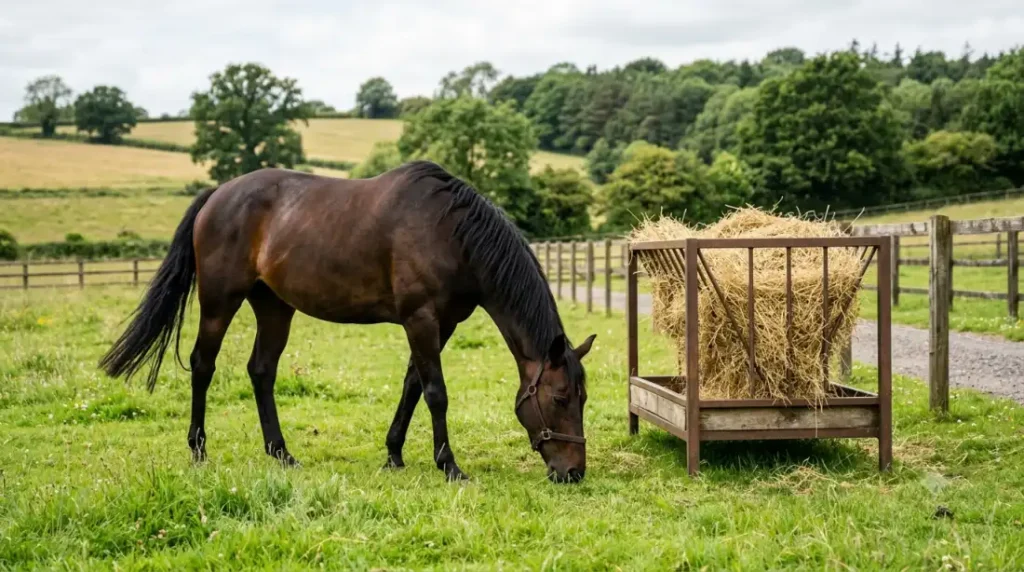
Horses look like they could eat just about anything, but their digestive system is actually very specific. They’re built to graze slowly, almost all day long, on fibrous plants like grass and hay.
So while the answer might seem simple, feeding a horse the right way takes a bit more understanding.
In this guide, we’ll break it down in a clear, practical way so you can understand what horses really eat, what they don’t need, and how it all fits together.
So… What Do Horses Eat?
At the core, a horse’s diet is built around forage — meaning grass and hay. Everything else is added only when needed.
A typical horse diet may include:
- Fresh pasture grass
- Hay (dried grass or forage)
- Alfalfa or other legume hays
- Grains or commercial feeds (only for some horses)
- Vitamins and mineral supplements
- Salt
- Clean, fresh water
- Small, safe treats
But here’s the most important thing to remember: no two horses eat exactly the same way.
A young growing horse, a retired pasture horse, and a performance horse all have very different needs.
Most of the time, forage should make up the majority of what a horse eats. In fact, many horses can live very well on good-quality hay or pasture alone.
1. Grass and Pasture: The Natural Diet
If you watch horses in a field, you’ll notice something simple — they just keep grazing.
That’s exactly how they’re designed to eat.
Fresh grass provides:
- Energy
- Fiber
- Natural vitamins and minerals
- Hydration (to a degree)
But the quality of grass changes a lot depending on the season, soil, and how mature it is. Spring grass, for example, is much richer than dry summer pasture.
Is more grass always better?
Not really.
Some horses do great on pasture, but others can gain weight quickly or develop health issues like laminitis if the grass is too rich.
So instead of asking “Can my horse have grass?” it’s better to ask:
👉 “How much grass is right for THIS horse?”
An overweight horse may need limited grazing, while a working horse may need more access.
When in doubt, a vet or equine nutritionist can help you find the right balance.
2. Hay: The Everyday Staple
When grass isn’t available, hay becomes the main food source.
Hay is simply grass that has been cut, dried, and stored. It keeps horses fed through winter or in stables when pasture isn’t an option.
Common types include:
- Timothy
- Orchardgrass
- Brome
- Fescue
- Alfalfa (a richer legume hay)
Alfalfa tends to be more nutrient-dense, especially in protein and calcium, compared to most grass hays.
How much hay does a horse need?
A simple rule many horse owners use is:
- At least 1% of body weight per day
- Often closer to 1.5–2% for most adult horses
So a 1,000-pound horse might eat around 15–20 pounds of hay daily.
But this is just a starting point — not a strict rule. Every horse is different.
What makes good hay?
Good hay should be:
- Clean and fresh-smelling
- Free from mold or dust
- Properly stored
- Suitable for horses (not overly coarse or spoiled)
The truth is, hay can look fine but still vary in nutrition. That’s why testing hay is often more useful than just judging it by appearance.
3. Alfalfa: The “Richer” Forage
Alfalfa is often used when horses need extra nutrition.
It’s higher in:
- Protein
- Calcium
- Digestible energy
That makes it useful for growing horses, lactating mares, or horses needing weight gain.
But it’s not automatically better.
Some easy-keeping horses actually do better on plain grass hay because alfalfa can be too rich for them.
It’s all about matching the feed to the horse — not the other way around.
4. Grains and Horse Feeds: Do All Horses Need Them?
This is where many people get confused.
Yes, horses can eat grains like oats, corn, and barley — but that doesn’t mean they always should.
In fact, many healthy adult horses don’t need grain at all.
Grains and commercial feeds are usually added when a horse needs extra energy, such as:
- Performance horses
- Growing foals
- Pregnant or nursing mares
- Horses struggling to maintain weight
Common feed ingredients include:
- Oats
- Corn
- Barley
- Processed grains
- Added vitamins and minerals
- Protein sources
But here’s the key point:
👉 Grain is not a “default food” for horses. It’s a tool used only when needed.
Feeding grain just because a horse seems hungry or bored can actually cause problems if not balanced correctly.
5. Vitamins and Minerals: The Hidden Part of the Diet
Even if a horse eats plenty of hay or grass, it may still be missing certain nutrients.
That’s where supplements or ration balancers come in.
They help fill nutritional gaps like:
- Minerals
- Trace elements
- Extra protein
- Vitamins
Not every horse needs supplements, but many benefit from a properly balanced diet plan.
This is also why there is no single “perfect horse diet.” What works for one horse may not work for another.
6. Salt: Small but Important
Salt might not look like food, but it’s essential.
Horses need salt for:
- Hydration
- Muscle function
- Nerve function
Most horses should have free access to a salt block or loose salt.
Horses that sweat a lot may need extra electrolytes, especially in hot weather or during heavy work.
7. Water: The Most Important “Food”
If there’s one thing horses absolutely must have, it’s water.
Clean, fresh water should always be available.
A horse’s water needs change depending on:
- Weather
- Exercise level
- Diet (dry hay vs fresh grass)
- Pregnancy or lactation
A horse eating dry hay will drink more water than one grazing fresh pasture.
Without enough water, digestion and overall health can quickly suffer.
8. Fruits and Vegetables: Safe Treats in Small Amounts
Most horse owners love giving treats — and horses usually love receiving them.
Safe options include:
- Carrots
- Apples
- Some vegetables
- Commercial horse treats
But treats should always stay just that — treats.
They should never replace proper forage or balanced feed.
A good rule is: small amounts, occasionally, not daily overfeeding.
9. Foods Horses Should NOT Eat
Not everything green or sweet is safe for horses.
Avoid:
- Moldy or spoiled hay
- Dirty or contaminated feed
- Sudden large feed changes
- Excess sugary treats
- Unknown plants or garden clippings
Some plants are toxic, and even small amounts can be dangerous.
If you’re ever unsure, it’s always safer to ask a vet first.
10. How Often Should Horses Eat?
Horses are natural grazers — they’re meant to eat slowly throughout the day, not in big meals.
That’s why long gaps without food can be stressful for their digestive system.
Ideally, horses should have:
- Constant or frequent access to forage
- Small, steady meals rather than large ones
- Limited time without something to chew on
Slow-feeding hay nets can help mimic natural grazing behavior, especially for stabled horses.
11. Do Horses Need Grain Every Day?
Not necessarily.
Many horses live perfectly healthy lives without grain.
Grain is only needed when:
- Forage alone isn’t enough
- Energy demands are higher
- The horse is in work, growth, or reproduction stages
Sometimes improving hay quality is more effective than adding grain.
12. Changing a Horse’s Diet (Do It Slowly!)
One of the biggest mistakes horse owners make is changing feed too quickly.
A horse’s digestive system needs time to adjust.
Always change diet gradually, especially when:
- Switching hay types
- Adding grain
- Introducing supplements
Think of it like this: slow changes = a happy gut.
A Simple Way to Think About a Horse’s Diet
If you strip everything down, a healthy horse’s diet usually looks like this:
- Mostly hay or grass
- Clean water always available
- Salt for balance
- Extra feed only if needed
That’s it.
Everything else is adjustment based on the individual horse.
So, what do horses actually eat?
The simplest answer is: they’re built to eat forage — and mostly just forage.
Grass and hay are the foundation. Everything else is added only when a horse truly needs it.
The best feeding plan is never one-size-fits-all. It depends on the horse’s age, workload, health, and even personality in some cases.
When in doubt, don’t guess — ask a professional. A small adjustment in diet can make a huge difference in a horse’s health and happiness.
And remember: a well-fed horse isn’t the one eating the most… it’s the one eating the right balance.