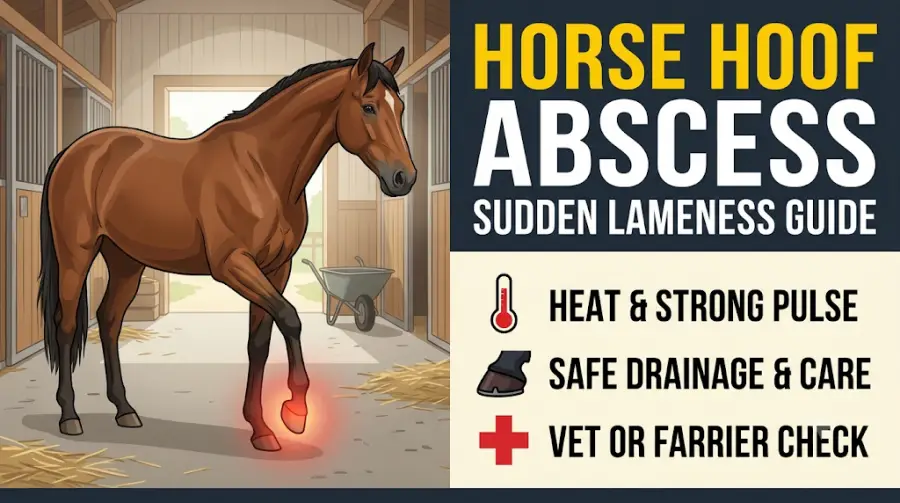
A horse can appear perfectly comfortable during one routine check and then become dramatically lame a few hours later. One possible explanation is a horse hoof abscess, a painful infection inside the hoof that creates pressure as infected material builds up beneath the hard outer structure.
Hoof abscesses are a common reason for sudden lameness in horses. The affected horse may hesitate to walk, point one foot forward, shift its weight repeatedly or refuse to put the hoof down. Although many uncomplicated abscesses respond well to appropriate treatment, severe pain should never be dismissed as a minor hoof problem.
The important thing for an owner is to recognize the warning signs, protect the horse and involve a veterinarian or qualified farrier. Similar symptoms can occur with fractures, puncture wounds, laminitis and other serious conditions, so guessing at the diagnosis can delay the right treatment.
This guide explains what a hoof abscess is, why it develops, how it is diagnosed, what treatment usually involves and how to support recovery.
What Is a Horse Hoof Abscess?
A hoof abscess is a localized pocket of infection within the hoof. It develops when bacteria enter through a weakness, crack, puncture or damaged area in the hoof’s protective structure.
The infection produces inflammatory material, including pus. Because the hoof capsule is hard and cannot expand easily, pressure can build up inside it. That pressure is one reason an affected horse may experience intense pain.
An abscess can develop in a horse with shoes or in one that is barefoot. It may be located beneath the sole, near the white line or within other areas of the hoof. Sometimes the infection eventually finds a route to the surface and drains through the sole, heel or coronary band.
The appearance of the hoof does not always reveal the problem immediately. A horse can have severe lameness even when the outside of the foot looks relatively normal.
Common Signs of a Hoof Abscess
The most noticeable sign is often sudden lameness. Some horses become so uncomfortable that they barely want to place the affected foot on the ground.
Watch for the following changes:
1. Sudden lameness
A horse may go from walking normally to showing obvious discomfort over a short period. The degree of lameness can vary, but severe cases may look alarming.
Do not assume that sudden, severe lameness automatically means an abscess. A fracture or penetrating injury can produce similar signs and needs urgent assessment.
2. Increased heat in the hoof
The affected foot may feel warmer than the other feet. Comparing all four hooves can help an owner notice an unusual difference, although hoof temperature alone cannot confirm an abscess.
3. A stronger digital pulse
The digital pulse is felt in the arteries supplying the foot. An unusually strong or bounding pulse can indicate inflammation or pain within the hoof.
If you are unfamiliar with checking this pulse, ask your veterinarian or farrier to demonstrate the correct location and technique.
4. Reluctance to bear weight
A horse may repeatedly lift the affected foot, rest it or shift its weight between the legs. Some horses stand with one foot held slightly forward to reduce pressure.
5. Swelling around the lower leg
In some cases, swelling can develop around the pastern or lower limb. This should not automatically be attributed to a simple abscess. Significant swelling, heat or spreading inflammation requires veterinary assessment.
6. Discharge near the hoof
When an abscess reaches the surface, pus may drain from an opening in the sole, heel or coronary band. You may notice moisture, an unpleasant smell or a small area of discharge.
Even if the abscess has started draining, the horse still needs appropriate care. The opening must be protected from dirt and contamination.
What Causes Hoof Abscesses in Horses?
There is rarely just one explanation for every abscess. The underlying problem is usually a route through which bacteria can enter the hoof.
1. Small cracks and weaknesses
The hoof wall and sole are exposed to regular pressure, moisture changes and everyday wear. Small defects can provide an entry point for bacteria.
A crack does not necessarily mean an abscess will develop, but damaged hoof tissue deserves attention.
2. Puncture injuries
A nail, sharp stone, piece of metal or other object can penetrate the sole. This can introduce bacteria into deeper tissues.
A suspected puncture wound is particularly important. Do not pull out an embedded object before speaking with a veterinarian. Its position and direction may help the vet assess how deep the injury goes.
3. Wet and dry conditions
Repeated changes between wet and dry environments can affect hoof quality. Prolonged exposure to wet ground may soften the hoof, while very dry conditions can contribute to cracking in some horses.
The goal is not to keep every hoof completely dry at all times. It is to provide sensible footing, clean surroundings and regular hoof care.
4. Poor hoof balance or delayed trimming
Overgrown hooves, flares and stretched areas around the white line can make the hoof more vulnerable to damage and contamination.
Regular farrier visits help maintain hoof balance and identify changes before they become more serious.
5. Bruising and excessive pressure
Hard or uneven ground, sharp stones and excessive pressure can bruise sensitive structures within the foot. Damaged tissue may become more vulnerable to infection.
If a horse repeatedly develops abscesses in the same hoof, the underlying cause should be investigated rather than treating every episode as an isolated problem.
How Is a Hoof Abscess Diagnosed?
A veterinarian or experienced farrier will usually begin by asking when the lameness started and whether anything changed recently.
Useful details include:
- The date of the horse’s last farrier visit.
- Whether the horse wears shoes.
- Recent turnout and ground conditions.
- Any recent puncture injury or suspected stone bruise.
- Whether the hoof has been unusually warm.
- Whether the horse has experienced similar problems before.
The professional may then clean the hoof and examine the sole, frog, hoof wall, heel and coronary band.
Hoof testers
Hoof testers are specialist tools used to apply controlled pressure to different parts of the hoof. A painful response in a particular area can help the professional locate the suspected problem.
Owners should not try to reproduce this examination with improvised tools. Incorrect pressure can hurt the horse and does not provide a reliable diagnosis.
Imaging when necessary
Not every abscess requires an X-ray. However, imaging may be recommended if the suspected abscess is difficult to locate, the horse has a puncture wound, the lameness does not improve or another injury needs to be ruled out.
A veterinarian may use radiographs to investigate possible bone involvement, fractures or other problems within the foot.
Horse Hoof Abscess Treatment
The main treatment objective is to relieve pressure safely, allow appropriate drainage and protect the affected area while it heals.
The exact plan depends on the location and severity of the infection.
1. Veterinary or farrier examination
The first step is identifying where the pain is coming from. A veterinarian or qualified farrier can examine the foot and decide whether drainage is appropriate.
A horse with severe lameness, a suspected puncture injury, fever or significant swelling should receive prompt veterinary attention.
2. Controlled drainage
If an abscess is located and suitable for drainage, a veterinarian or qualified professional may carefully open a small area using the appropriate hoof instruments.
The aim is to provide a route for infected material to escape while removing as little healthy hoof tissue as possible.
Do not attempt to cut, dig or drill into the hoof yourself. Removing too much sole can create additional damage, introduce infection or delay healing.
3. Poultices and dressings
A professional may recommend a poultice or suitable dressing to encourage drainage or protect the area.
Once drainage has been established, the type of dressing may change. The hoof should be protected from dirt, manure and wet conditions according to the treatment instructions.
Bandages must not be excessively tight, especially around the coronary band.
4. Pain relief
A horse with an abscess may need medication to manage pain and inflammation. Your veterinarian can decide which medication is appropriate and how it should be used.
Never give human painkillers or use leftover veterinary medication without professional advice.
5. Antibiotics
Antibiotics are not automatically required for every uncomplicated hoof abscess. Treatment depends on whether infection has spread into deeper tissues or whether other complications are present.
The veterinarian should make this decision after examining the horse.
6. Tetanus protection
Puncture injuries and contaminated wounds make vaccination history especially important. Ask your veterinarian whether the horse’s tetanus protection is current and whether a booster is needed.
What Should Owners Do at Home?
Home care supports professional treatment; it does not replace diagnosis.
Once your veterinarian or farrier has examined the horse, follow their instructions carefully.
Keep the affected hoof clean. Use the dressing and protection recommended for the horse. Check it regularly for slipping, excessive moisture, contamination or signs that it is becoming too tight.
Provide suitable footing. A clean, dry, well-bedded area can help protect the hoof. Avoid forcing a painful horse to walk over rough or stony ground.
Monitor the horse’s comfort. Record whether the horse is putting more weight on the affected foot, whether swelling is changing and whether discharge is reducing.
Follow the exercise instructions. Do not return to riding or normal work simply because the horse appears slightly more comfortable. Your veterinarian or farrier should guide the return to activity.
Keep a record. Note the date symptoms started, treatment provided, dressing changes and any follow-up visits. This information can be useful if the abscess returns or healing takes longer than expected.
How Long Does a Horse Hoof Abscess Take to Heal?
Recovery time depends on the size, depth and location of the abscess, whether drainage has been established and whether deeper structures are affected.
Some uncomplicated abscesses improve considerably after successful drainage. Others take longer, especially when the infection is deep or the opening is difficult to protect.
A horse should not be considered fully recovered just because the initial pain has reduced.
Before returning to normal exercise, check that:
- The horse is comfortable at a walk.
- The affected foot is no longer showing significant sensitivity.
- The drainage site is healing as expected.
- There is no new swelling or discharge.
- Your veterinarian or farrier agrees that normal activity can resume.
If the horse remains lame after drainage, becomes more uncomfortable or develops new symptoms, contact the veterinarian again.
How to Help Prevent Future Hoof Abscesses
No prevention routine can eliminate every abscess, but sensible hoof and stable management can reduce avoidable risks.
Maintain a regular farrier schedule
Work with a qualified farrier to establish a trimming or shoeing interval that suits your horse. The correct schedule depends on hoof growth, conformation, workload and individual needs.
Do not wait until the hooves are visibly overgrown before arranging an appointment.
Check the ground regularly
Look for exposed nails, broken fencing materials, sharp metal, glass and other objects in turnout areas, stables and walkways.
Remove hazards safely and repair damaged areas.
Keep stable areas clean
Remove manure and wet bedding regularly. Maintain suitable drainage and avoid allowing heavily contaminated material to build up around the horse’s feet.
Manage wet and dry conditions
Provide access to appropriate shelter and well-maintained footing. Where possible, avoid leaving horses standing for long periods in persistently muddy or contaminated areas.
Inspect the feet during daily care
Pick out the hooves and look for unusual changes. Notice new cracks, stones lodged in the sole, foul smells, damaged shoes or tenderness.
Regular observation makes it easier to identify a problem before it becomes more complicated.
When Is a Hoof Abscess an Emergency?
A suspected abscess deserves professional assessment, but some situations require urgent veterinary attention.
Contact a veterinarian promptly if:
- The horse cannot or will not bear weight.
- A nail or other object has penetrated the hoof.
- There is major swelling around the lower leg.
- The horse has a fever or appears generally unwell.
- The horse is sweating, trembling or showing severe distress.
- The pain is getting worse rather than improving.
- The abscess keeps returning in the same area.
- The horse remains lame after treatment.
A puncture wound should never be treated as an ordinary abscess without veterinary assessment. Important structures inside the foot can be affected.
Frequently Asked Questions
Can a horse hoof abscess cause sudden lameness?
Yes. Sudden, sometimes severe lameness is a common sign. However, fractures, puncture injuries and other conditions can look similar, so professional examination is important.
Can a hoof abscess heal on its own?
Some abscesses eventually find a route to drain naturally, but waiting without professional advice can be risky. The cause of the lameness should be established and the foot protected.
Should I soak a horse’s hoof in Epsom salts?
Soaking is sometimes recommended as part of a treatment plan, but it is not suitable for every situation. Excessive soaking can soften and weaken hoof tissue. Ask your veterinarian or farrier whether it is appropriate and how often it should be done.
Do all hoof abscesses need antibiotics?
No. Antibiotics are not routinely necessary for every uncomplicated abscess. A veterinarian decides whether they are needed based on the depth and extent of infection.
Can a shod horse develop an abscess?
Yes. Both barefoot and shod horses can develop hoof abscesses. A shoe does not completely prevent bacteria from entering through a damaged area.
Can the same horse get repeated hoof abscesses?
Yes. Repeated episodes can occur, sometimes because of an underlying hoof problem, injury, environmental conditions or another health issue. Recurrence in the same foot deserves further investigation.
When can I ride my horse again?
Wait until the horse is comfortable, the affected area is healing and the veterinarian or farrier has approved a return to work. Rushing back into exercise can worsen discomfort or interfere with recovery.
A horse hoof abscess can be frightening because the lameness may appear suddenly and look extremely painful. The good news is that many uncomplicated abscesses respond well to appropriate professional treatment.
The most useful response is to stay calm, protect the horse, avoid digging into the hoof and contact a veterinarian or qualified farrier. Careful diagnosis, controlled drainage when appropriate, clean dressings and sensible follow-up all contribute to recovery.
Regular hoof inspections, good stable management and consistent farrier care can also help reduce preventable problems. Above all, remember that sudden severe lameness is a reason to investigate promptly—not an opportunity to guess at the cause.