
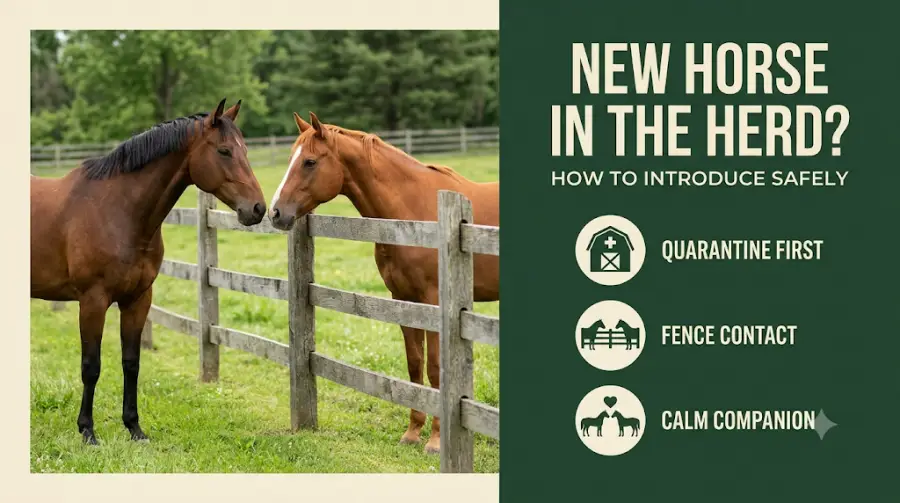
Bringing a new horse home is an exciting experience. You may already be thinking about its feeding routine, stable arrangement, grooming equipment and future riding plans. But there is one important part of horse ownership that deserves just as much attention: introducing the newcomer to the horses already living on your property.
For horses, meeting an unfamiliar animal is not always a friendly experience. They are social animals, but they also need time to understand new companions, establish comfortable relationships and adjust to changes in their surroundings. A horse that is normally calm may become defensive when another animal enters its familiar space.
That is why introducing a new horse to an existing herd should never be treated as a rushed task. A little preparation, suitable fencing and careful observation can make the transition safer for everyone.
Whether you have two horses in a small paddock or manage a larger group, the process should be based on the individual animals rather than a fixed timetable. Here is how to approach a new herd introduction, what behaviour to expect and when it is better to slow things down.
Why Introducing a New Horse Requires Planning
Horses naturally form social relationships. Within a group, individuals become familiar with one another’s behaviour, preferred companions and access to shared resources such as grazing areas, water and shelter.
When a newcomer arrives, those familiar relationships may change. Established horses may approach, investigate, threaten or move the unfamiliar animal away. The new horse must also learn where it can stand, graze, rest and find companionship.
Some initial excitement is normal, but that does not mean every confrontation should be ignored.
The main concerns during an introduction are:
- Kicking, biting and chasing.
- Competition around hay and water.
- Stress caused by unfamiliar surroundings.
- Injury from unsuitable fencing or crowded spaces.
- Difficulty accessing shelter or resting areas.
- Persistent bullying of a less confident horse.
A good introduction gives horses opportunities to become familiar with one another without forcing immediate physical contact.
1. Complete a Health Check Before Introducing the New Horse
Before thinking about social introductions, consider the health of the newcomer and the existing herd.
A horse arriving from another stable, farm or sale environment may have been exposed to infectious diseases without showing obvious symptoms. Transport and environmental changes can also contribute to stress.
Discuss an appropriate arrival health plan with your veterinarian.
Important considerations include:
- Recent vaccination history.
- Respiratory symptoms such as coughing or nasal discharge.
- Skin conditions and unusual lesions.
- Parasite-control history.
- Fever, reduced appetite or unusual tiredness.
- Any known history of infectious disease.
Quarantine is an important part of responsible horse management. The appropriate isolation period and procedures should be established with a veterinarian and local disease-control guidance. The British Horse Society recommends a minimum 21-day quarantine for new arrivals in its disease-prevention guidance.
During quarantine, use separate equipment where possible and avoid sharing buckets, grooming tools and other items that could transfer infection.
Do not introduce a horse simply because it appears healthy on arrival. Some infectious conditions may take time to become noticeable.
2. Choose the Right Companions for the New Horse
Not every horse will be equally suitable as a first companion.
Before planning the introduction, consider the temperament and management needs of all the animals involved.
For example, a calm and socially experienced horse may be a better first companion than one that regularly chases or threatens other horses.
Consider these factors:
Age: Younger horses may have different social experience and energy levels compared with older animals.
Temperament: A confident, calm horse may adjust more easily than one that reacts strongly to unfamiliar companions.
Size and physical condition: Differences in size, mobility and fitness can influence the risk of injury during conflict.
Sex and reproductive status: The presence of stallions, mares in season or other reproductive factors may affect compatibility and management decisions.
Previous experiences: A horse that has been bullied or kept alone may need additional time and support.
Avoid choosing companions based only on appearance or breed. Individual behaviour is much more useful when planning a safe introduction.
3. Allow Horses to See and Smell Each Other First
One of the simplest ways to begin an introduction is through a secure physical barrier.
Place the newcomer in a neighbouring paddock or suitable enclosed area where the established horses can see and smell it without having direct access.
This gives everyone an opportunity to become familiar with the new arrival while maintaining physical separation.
During this stage, observe whether the horses:
- Approach the fence calmly.
- Stand near each other without constant agitation.
- Graze or rest while the other horse is visible.
- Show curiosity without repeatedly threatening one another.
- Move away when they need more space.
Some squealing, ear-pinning and brief displays of excitement may occur. What matters is whether the behaviour settles or becomes persistent and intense.
Make sure the dividing fence is strong and suitable for horses. Avoid dangerous wire barriers or structures that could trap legs if an animal becomes excited.
Do not leave unfamiliar horses together across an unsafe fence simply to speed up the process.
4. Give the New Horse Time to Explore Its Environment
A newcomer needs to understand more than the other horses. It also needs to become comfortable with the physical layout of its new surroundings.
Before group turnout, allow the horse to explore an appropriate secure area independently.
Let it become familiar with:
- The paddock boundaries.
- Gates and entrances.
- Shelter locations.
- Water sources.
- Grazing areas.
- Safe places to stand and move.
This is particularly important when the horse has arrived at a completely unfamiliar property.
A horse that understands its surroundings may be less likely to panic when other animals approach.
Keep the environment as calm as possible. Avoid introducing unfamiliar equipment, sudden changes in feeding and unnecessary handling during the same adjustment period.
5. Start With One Calm Horse Instead of the Whole Herd
If you have several horses, introducing the newcomer to everyone at once may create unnecessary pressure.
A gradual approach often makes the process easier to manage.
Once quarantine and the initial health checks are complete, consider introducing the newcomer to one suitable, calm companion first.
Choose a safe paddock with enough room for both horses to move away from each other. Avoid narrow spaces, dead ends and areas where an animal could become trapped.
During the first meeting, watch for:
- Brief sniffing and investigation.
- Ear movements and changes in posture.
- Mutual interest.
- Short periods of walking or following.
- Attempts to move away from one another.
The horses may establish their relationship through body language and movement. Allowing them sufficient space is important.
Do not assume that the first meeting must involve grooming or immediate friendship. Quietly sharing an area without conflict can be a perfectly reasonable beginning.
6. Prepare the Paddock Before Direct Introduction
The environment can make a significant difference to how horses behave when they first share space.
A crowded paddock with limited resources can increase competition. Horses may become more defensive when they have to fight for access to food, water or shelter.
Before allowing direct contact, inspect the turnout area.
Look for:
- Secure fencing and functioning gates.
- Enough open space for horses to move away.
- No dangerous equipment or sharp objects.
- No narrow corners that restrict escape routes.
- Suitable ground without major slipping hazards.
- More than one accessible drinking point where practical.
- Adequate shelter and resting opportunities.
Pay particular attention to feeding arrangements.
If horses have to compete for one hay pile, the newcomer may be pushed away. Providing multiple separated feeding locations can reduce unnecessary competition.
Water access should also be considered. A subordinate horse should not have to repeatedly approach an aggressive companion just to drink.
7. Understand Normal Behaviour During the First Meeting
Horse owners sometimes become worried when they see unfamiliar horses squeal, pin their ears or move quickly around one another.
These behaviours can be part of normal social communication.
However, it is important to distinguish short-lived communication from behaviour that creates a real risk of injury.
Behaviours that may occur during adjustment
- Sniffing and investigating.
- Brief squealing.
- Ear-pinning.
- Moving another horse away.
- Short periods of chasing.
- Establishing personal space.
- Gradually returning to grazing.
Warning signs that need attention
- Repeated aggressive chasing.
- Continuous biting or kicking attempts.
- One horse being trapped against a fence.
- Persistent harassment without an opportunity to escape.
- Visible wounds or lameness.
- A horse being prevented from reaching water or forage.
- Extreme agitation that does not settle.
If there is serious aggression or a risk of injury, separate the animals using a safe procedure and seek experienced assistance.
Never put yourself between fighting horses or attempt to grab an agitated horse by entering a dangerous space.
8. Monitor Feeding, Water and Resting Arrangements
A successful introduction is not just about whether horses can stand together.
They also need to be able to carry out ordinary daily activities without constant pressure.
Watch what happens when the horses approach food, water and shelter.
A new horse that is repeatedly chased away from its hay may gradually lose condition. A subordinate animal that avoids the water source may become dehydrated.
Try to provide sufficient resources at separated locations so horses do not have to compete unnecessarily.
Observe whether each horse:
- Eats without repeated interruption.
- Drinks normally.
- Can rest comfortably.
- Has access to suitable shelter.
- Can move away from dominant companions.
- Maintains its normal appetite and behaviour.
If you notice a horse being consistently excluded, reassess the group arrangement rather than assuming the animals will eventually resolve everything themselves.
9. How Long Does It Take for Horses to Accept a New Herd Member?
There is no universal introduction timetable.
Some horses become comfortable with a new companion relatively quickly. Others require a much longer adjustment period.
World Horse Welfare notes that initial conflict may gradually reduce over the first several days to two weeks, although a group can take several months to become fully stable.
Use behaviour rather than a calendar to decide when to progress.
Positive signs include relaxed grazing, resting near other horses, reduced threatening behaviour and normal access to shared resources.
If conflict continues, return to an earlier introduction stage and seek professional advice.
Remember that a horse does not need to become the best friend of every animal in the paddock. A stable arrangement with enough space and access to resources is more important than forcing close relationships.
10. Common Mistakes to Avoid When Introducing Horses
Even well-intentioned owners can make mistakes during herd introductions.
Putting every horse together immediately: This can overwhelm the newcomer and increase the risk of injury.
Ignoring quarantine: A healthy-looking horse may still carry an infectious disease.
Using unsuitable fencing: Weak or hazardous fencing can cause serious injuries when horses approach one another.
Providing only one feeding location: This can increase competition and prevent quieter horses from eating comfortably.
Rushing the process: Moving forward before horses are ready can create unnecessary stress.
Ignoring repeated bullying: Persistent harassment is not something an owner should simply wait out.
Leaving the first meeting unobserved: Initial direct introductions should be planned and monitored by experienced people.
Assuming all horses behave alike: Temperament, age, previous experiences and health can influence how an individual responds.
11. Create a Simple Herd Introduction Monitoring Routine
A written record can make the process easier, especially when several people are responsible for the horses.
For the first few weeks, record observations such as:
- Date and stage of introduction.
- Which horses have been introduced.
- Appetite and water intake.
- Changes in social behaviour.
- Any chasing, biting or kicking.
- Signs of wounds or lameness.
- Whether every horse can access resources.
- Any changes to the management plan.
Compare each horse with its usual behaviour rather than relying on a single observation.
If a horse becomes unusually withdrawn, stops eating, develops an injury or shows signs of illness, contact the appropriate professional.
Good record-keeping also helps identify whether a particular combination of horses consistently creates problems.
Frequently Asked Questions
Can I put a new horse directly into an existing herd?
It is generally safer to use a gradual introduction process after appropriate quarantine and health checks. Directly placing an unfamiliar horse into an established group can increase stress and injury risk.
How many days should horses spend separated by a fence?
There is no fixed number of days suitable for every group. Observe how the animals behave. Some may become comfortable relatively quickly, while others need considerably more time.
Should I introduce a new horse to one horse or the whole herd?
When practical, introducing the newcomer to a calm, suitable companion first can make the process less overwhelming. The next stage should depend on how both animals respond.
Is chasing normal when horses meet for the first time?
Brief chasing and social displays may occur. However, repeated chasing, trapping, kicking and persistent bullying require intervention and reassessment.
Can two horses share the same feeding area?
They may do so once they are comfortable together, but sufficient space and multiple feeding locations are important. Watch for any horse being prevented from eating.
What if my existing horse does not accept the newcomer?
Do not force the relationship. Return to a safer introduction stage, reassess compatibility and seek help from an experienced equine behaviour professional if needed.
Introducing a new horse to an existing herd is a process that deserves patience, observation and good management.
The goal is not to make every horse become friends immediately. It is to create an environment where each animal can feel secure, move freely, access food and water, and establish social relationships without unnecessary conflict.
Start with health checks, use safe barriers, choose suitable companions and provide enough space and resources. Pay attention to how the horses behave rather than rushing through a predetermined schedule.
A thoughtful introduction can make the transition easier for the newcomer and help protect the welfare of the horses already living in the group.
When serious aggression, illness or injury occurs, involve the appropriate veterinarian or qualified equine professional rather than trying to solve the problem through trial and error.