Horse Emergency Symptoms: When You Should Call the Vet Immediately
Horse emergencies can change quickly. Owners often wonder whether a symptom is serious enough to justify a call, especially when the horse is still standing or eating. The safest approach is to call your veterinarian early when a problem is severe, unusual, rapidly worsening or associated with pain, breathing difficulty, collapse or neurologic changes.
Signs that should be treated as emergencies
Call your veterinarian immediately for:
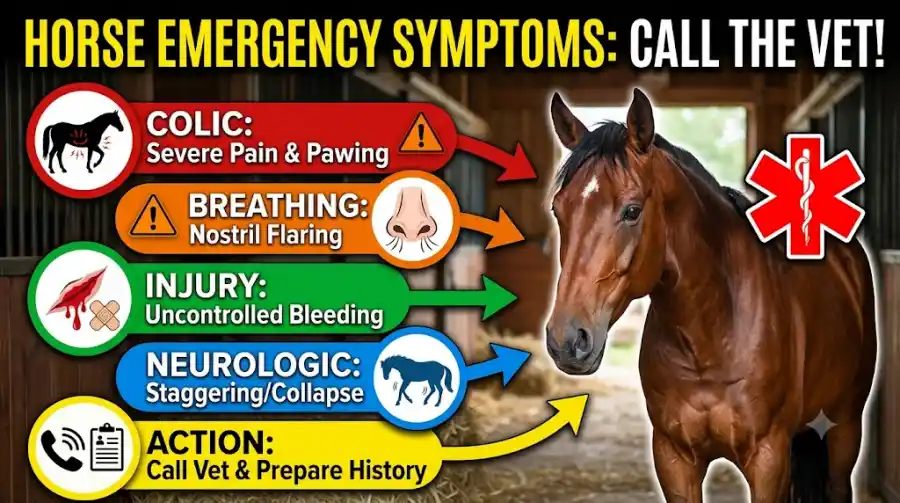
– Severe, repeated or unrelenting colic signs
– Difficulty breathing or open-mouth breathing
– Collapse, inability to stand or extreme weakness
– Uncontrolled bleeding
– A major wound, deep puncture or injury near a joint
– Suspected fracture or a horse that will not bear weight
– Seizures, staggering, head pressing or sudden severe confusion
– Severe heat stress or suspected heatstroke
– Choke signs that continue or produce nasal discharge
– A prolapse, severe eye injury or sudden loss of vision
– Poisoning or ingestion of a dangerous substance
– Very abnormal vital signs with depression or pain
If you are unsure, call. A veterinarian can help you decide what to do next.
Colic: do not wait for it to “look worse”
Colic is a general term for abdominal pain. Signs may include pawing, looking at the flank, repeated lying down, rolling, sweating, stretching, kicking at the belly, reduced manure or a quiet horse that is unusually dull.
Do not assume a horse must roll violently to have serious colic. Some horses become very quiet.
While waiting for advice:
1. Remove feed unless your veterinarian says otherwise.
2. Allow small sips of water if the horse can drink normally and the vet agrees.
3. Keep the horse in a safe area.
4. Walk only if it is safe and the horse is comfortable enough; do not exhaust the horse.
5. Record pain episodes, manure, pulse, temperature and medications.
6. Do not give drugs, oil or home remedies without veterinary direction.
Breathing problems
Rapid breathing after exercise may be normal, but breathing that remains difficult after rest is not. Emergency signs include nostril flaring, abdominal effort, noisy breathing, extended neck, blue or gray gums, coughing blood or collapse.
Move the horse to a quiet, well-ventilated area and avoid dust. Do not force exercise or oral medication into a horse that is struggling to breathe.
Serious wounds and bleeding
Apply firm direct pressure with clean cloth or gauze to active external bleeding. Do not repeatedly lift the dressing to inspect it; add more material on top if blood soaks through.
A wound near a joint, tendon sheath or eye is urgent even if it looks small. Puncture wounds can introduce infection deep into tissue. Keep the horse quiet and contact the vet.
Do not aggressively flush a deep wound unless the veterinarian instructs you. Avoid applying powders, creams or caustic products.
Neurologic emergencies
Sudden staggering, circling, weakness, inability to coordinate movement, seizures, collapse or unusual behavior can indicate a serious neurologic or toxic problem.
Keep people away, remove hazards and do not try to force the horse to walk. If the horse is down, protect the head if you can do so safely and wait for professional instructions.
Heat stress
A horse that remains extremely hot, weak, confused, uncoordinated or distressed after exercise or hot weather may be experiencing heat illness.
Stop work, move to shade and contact the veterinarian. Cooling instructions depend on the situation and local veterinary guidance. Do not delay the call while trying multiple home treatments.
Choke
Choke occurs when feed becomes lodged in the esophagus. Signs can include feed or saliva coming from the nostrils, coughing, repeated swallowing, stretching the neck and distress.
Remove feed and water until the veterinarian advises otherwise. Do not syringe water, oil or medication into the mouth. Aspiration can lead to serious complications.
Eye injuries
Any sudden squinting, tearing, cloudiness, swelling, visible trauma or reluctance to open an eye deserves prompt veterinary attention. Eye problems can worsen rapidly and may threaten vision.
Keep the horse in a dim area if that is calming. Do not use leftover eye medication, especially steroid-containing products, unless the veterinarian directs you.
What to do while waiting for the vet
Prepare a concise update:
– What happened and when
– What the horse was doing beforehand
– Current symptoms and whether they are worsening
– Temperature, pulse and respiration if safely obtained
– Manure, urination, appetite and water intake
– Medications already given
– Possible toxins, injuries or recent feed changes
– The horse’s location and access instructions
Keep the horse in a safe, quiet area with good lighting and clear access for the veterinary team.
What not to do
Avoid:
– Giving painkillers without veterinary advice
– Forcing water, feed or supplements
– Walking an exhausted or unstable horse
– Pulling on a protruding object
– Applying unknown chemicals to wounds
– Waiting because the horse briefly seems better
– Transporting the horse without discussing it with the vet when a serious injury is suspected
Emergency judgment is not about recognizing a perfect list of symptoms. It is about noticing when your horse is significantly different from normal, in pain, deteriorating or unable to perform basic functions. Early veterinary contact is usually safer than delayed treatment.
FAQs
Should I call the vet if my horse has mild colic?
Yes, call for guidance. Mild-looking colic can become serious, and your veterinarian can advise whether monitoring, examination or referral is needed.
What if I cannot reach my regular veterinarian?
Try the practice’s emergency number, a nearby equine clinic or an emergency referral service. Keep trying while maintaining safe supportive care.
Should I transport an injured horse immediately?
Not always. Transport can worsen some injuries. Speak with a veterinarian first unless immediate evacuation is necessary for safety.